Case study: Gumlet turned ChatGPT mentions into 20% of inbound revenue. Read it →

Omniscient Digital Review 2026: Pricing, Methodology, and Real Results
 ByFouzia


Every review of Omniscient Digital currently ranking on Google has a conflict of interest baked into the first paragraph.
Discovered Labs, the top-ranked piece as of June 2026, is written by a competing AEO agency that uses the review to redirect buyers to their own product. The second-ranked piece is written by Alex Birkett, Omniscient’s co-founder, who is openly responding to what he calls “negative AEO“ from rivals.
The directory listings below them are thin aggregator pages with no analytical depth. The buyer doing actual research ends up reading either a sales pitch for a competitor or a defense from the company itself.
What is missing from this list is a review written by someone who understands GEO methodology well enough to evaluate the AI search claims, has no competing agency to sell, and is willing to say both what Omniscient does well and where the limits actually are.
This article breaks down what Omniscient Digital actually delivers, what the OmniscientX methodology involves at the mechanism level, what the published results mean for pipeline (not just traffic), how their GEO work holds up to scrutiny, and a clear decision framework for who should and should not hire them.
By the end, you will have everything you need to make a calibrated call, whether that ends in booking with Omniscient, evaluating an alternative, or determining the engagement is premature for your stage.
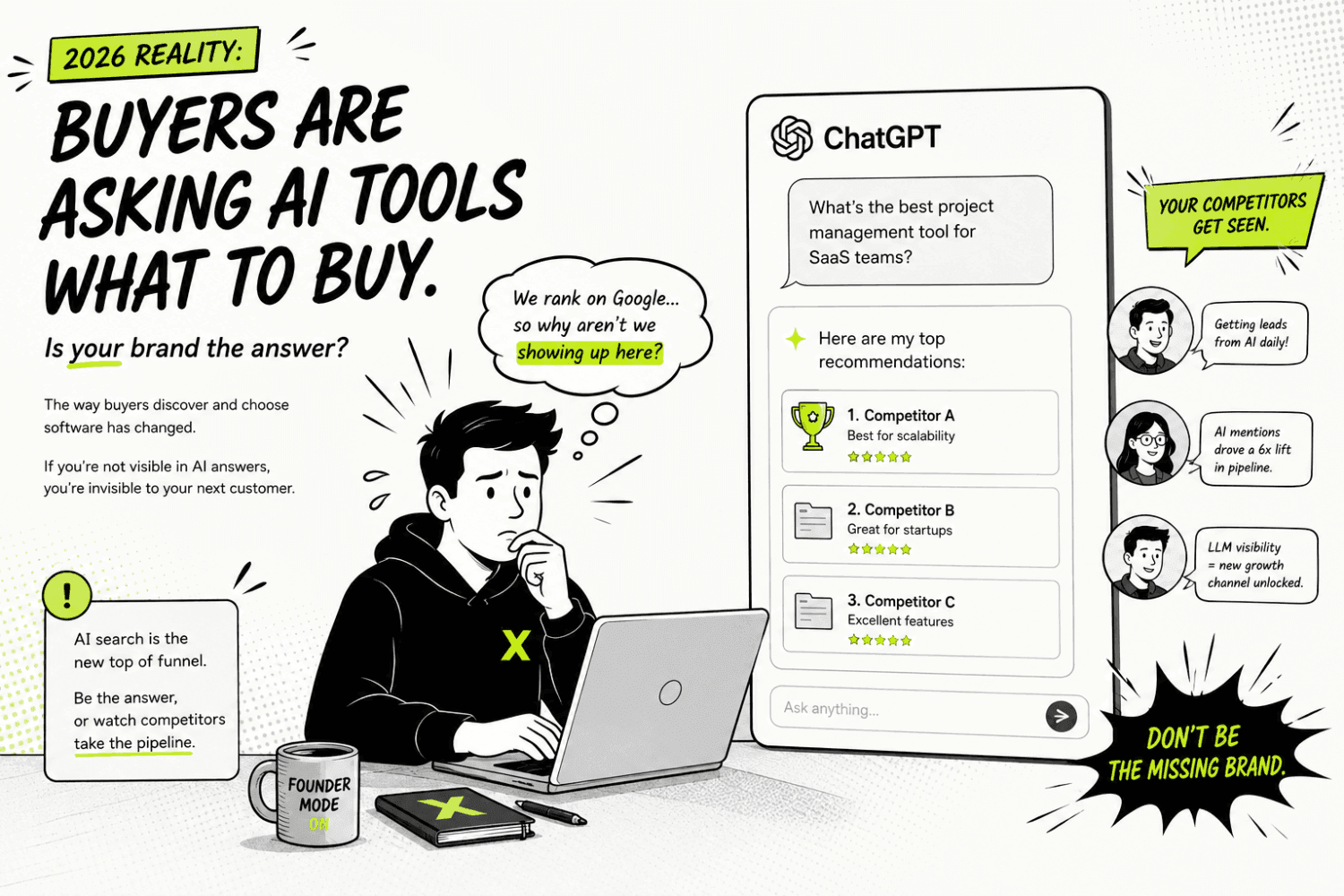
The short answer: Omniscient Digital is a B2B organic growth agency founded in 2019 that runs SEO, GEO, content production, and digital PR programs for software companies. Full-service engagements start at $10,000 per month. Published case studies include Jasper (810% organic session growth, $4M+ in blog-attributed ARR), Smartling ($3.7M in qualified pipeline from organic), and Convert (81% LLM visibility growth and 140% increase in AI citations within 60 days). The agency is best suited for funded B2B SaaS companies with a defined ICP, product-market fit, and a strategic growth horizon of six to twelve months minimum.
Key Takeaways
- Omniscient Digital is a premium B2B organic growth agency offering SEO, GEO, content production, and digital PR for software companies. Engagements are priced for companies with serious organic growth budgets and a strategic, long-term orientation.
- Published client results are named, specific, and verifiable across 15+ case studies. The most forward-looking data point is not the organic traffic growth. It is the LLM-referred conversion rate recorded by one of their clients, which runs 6x higher than traditional organic.
- GEO is a genuine service offering built on Omniscient’s Surround Sound SEO methodology, which predates the GEO category label by several years. It is not a rebranded SEO service.
- The agency is best suited for funded B2B SaaS companies at Series A to Series C, with defined positioning, a 6 to 12 month timeline horizon, and a marketing leader who wants a strategic partner rather than content volume.
- Before committing to any organic growth agency, audit your current AI citation rate across ChatGPT, Perplexity, Claude, Microsoft Copilot, and Gemini. The gap between your Google rankings and your LLM citation share is where the real agency evaluation starts.
What Omniscient Digital Specializes in
Omniscient Digital is an organic growth agency for B2B software companies, focused on SEO, GEO, content production, link building, and analytics.
Founded in 2019 and headquartered in Austin, Texas, it was built by three former in-house marketers: Alex Birkett (previously at Workato), David Ly Khim (previously Head of Growth at People.ai and Growth PM at HubSpot), and Allie Konchar (previously Senior Content Manager at Shopify).
The founding team did not come from an agency background. They came from the client side, and that orientation shapes how the agency is structured.
DerivateX builds GEO programs for B2B SaaS companies, so we review organic growth agencies through the lens of what the AI citation layer is actually doing for pipeline, not just what it looks like on a traffic dashboard.
The analysis below is based on Omniscient’s published case studies, third-party Clutch reviews, the Peec AI agency directory listing, and their own research output. We do not have an insider view of their internal operations, and we are not trying to sell you our services in this section.
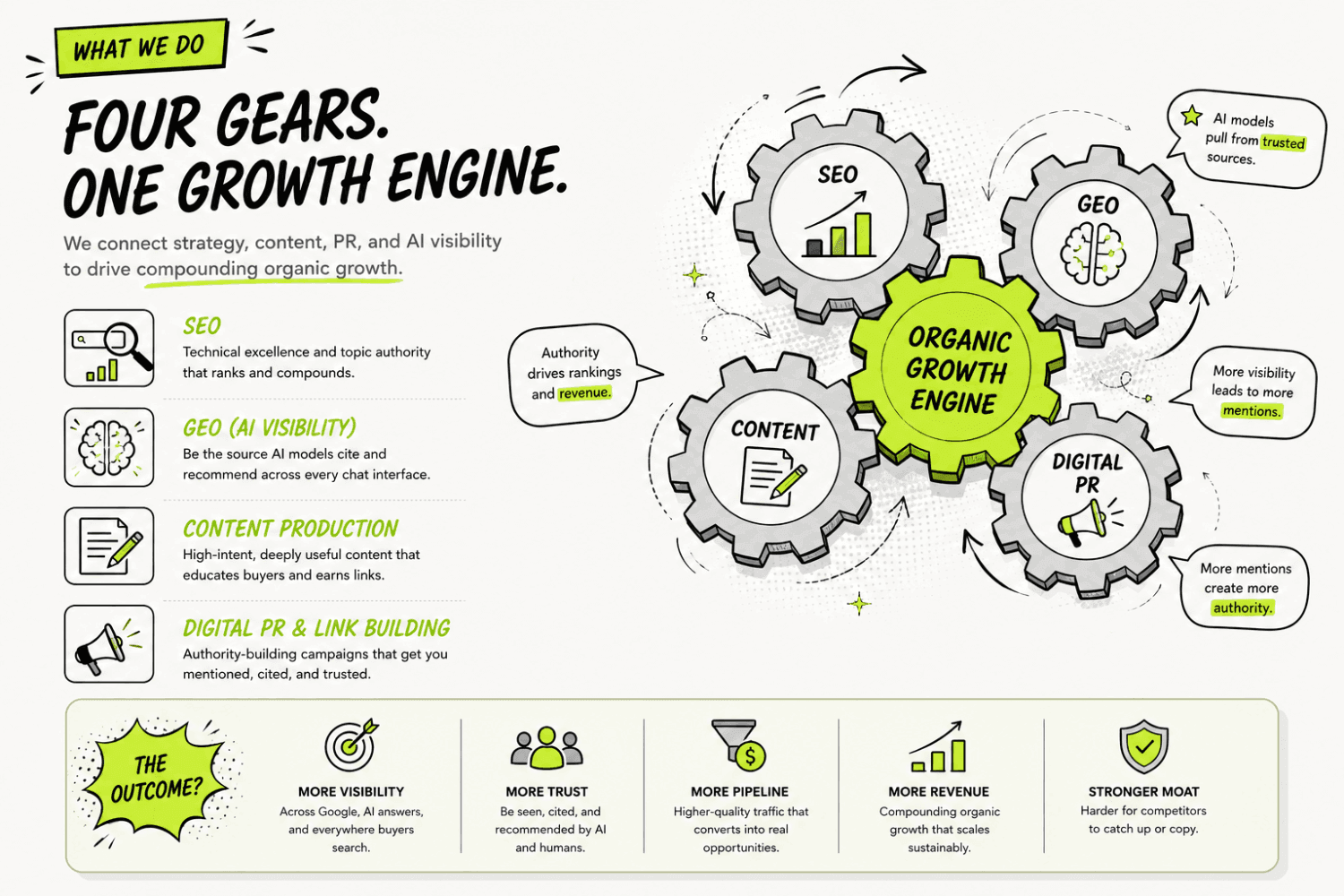
The most common misclassification in competing reviews is framing Omniscient as “an SEO agency that recently added GEO.“ That framing is wrong, and it matters. Omniscient built Surround Sound SEO before the GEO category had a name, a methodology designed to make a brand visible across all high-intent SERP positions for a target query, not just the first organic result.
Surround Sound SEO is a content strategy methodology developed by Omniscient Digital. The goal is to make a brand visible across every high-intent SERP position for a target query, not just the first organic result.
Rather than optimizing for a single ranking, Surround Sound SEO builds presence across review sites, comparison pages, third-party listicles, and owned content simultaneously. In the LLM era, this multi-surface logic maps directly onto how AI systems sample sources when constructing an answer.
The mechanism behind Surround Sound SEO, owning multiple surfaces where a buyer might encounter your brand, is functionally identical to what practitioners now call citation surface engineering in GEO.
The methodology predates the category label. What changed is where those surfaces live: Google SERPs in the pre-LLM era, LLM outputs in 2026. That foundation is also what justifies the price point, and understanding the mechanics before evaluating the cost is worth doing in that order.
Omniscient Digital Pricing: What a $10,000 per month Retainer Looks Like in Practice
Full-service engagements at Omniscient Digital start at $10,000 per month, strategy-only projects begin at $15,000, and multimedia thought leadership programs typically fall between $8,000 and $12,000 per month depending on scope.
These figures are publicly stated on Omniscient’s own website.
The six-month minimum engagement is listed explicitly on the Peec AI agency directory (peec.ai). Omniscient’s public positioning frames this as a preference for long-term partnerships, and the published case studies support the rationale: Jasper, Order.co, and AppSumo were all multi-year clients, not sprint engagements.
At the $10,000 per month tier, a buyer should expect the following scope elements based on what is described across published case studies and service pages:
- SEO and content strategy built on OmniscientX research (qualitative ICP interviews, competitive landscape mapping, content opportunity analysis tied to pipeline metrics rather than keyword volume alone)
- Content production at a cadence matched to strategic priority, not a fixed article quota
- Technical SEO auditing and implementation support
- Digital PR and link acquisition tied to brand mention and citation goals
- Reporting infrastructure designed to attribute organic and AI-referred traffic to pipeline outcomes, not just sessions
What is not included: paid media, video production, short-form social content, or standalone brand design. Omniscient does not position itself as a full-service marketing agency. It is a specialist in organic surface coverage.
The most useful way to evaluate this price point is not to compare it to a freelance content writer or a commodity SEO shop. Compare it to the cost of a senior in-house content hire ($120,000 to $160,000 per year) who still lacks the GEO methodology, tooling, and cross-client pattern recognition an agency brings. At $120,000 per year, $10,000 per month is cost-equivalent to one hire with substantially more leverage.
The OmniscientX Methodology: What Happens Before They Write a Single Piece of Content
Omniscient’s proprietary research process is called OmniscientX.
OmniscientX is Omniscient Digital’s proprietary research and strategy framework. It is a blended qualitative and quantitative process that maps a client’s buyer personas, competitive landscape, and content opportunity set before any content is produced.
The output is a strategy indexed to pipeline outcomes rather than keyword volume. It is the research layer that runs before every full-service Omniscient engagement.
Before any content is produced, the agency runs a blended qualitative and quantitative research phase that maps a client’s unique positioning, identifies the specific buyer personas and their actual language (not inferred keywords), and builds a content strategy indexed to business outcomes like qualified leads and pipeline rather than search volume.
This matters because most content strategies fail at the prioritization layer. They pick topics by volume and difficulty scores, then wonder why the traffic doesn’t convert. OmniscientX is designed to solve the upstream problem: build the strategy from buyer behavior, not from SERP data.
The distinction between strategy-first and content-first execution is where Omniscient earns its price premium. According to Omniscient Digital’s 2026 research, owned content accounts for just 23% of AI citations in branded queries, while 57% of AI citations point to reviews and third-party social proof.
That research finding shapes how Omniscient allocates effort across owned content, earned mentions, and entity-clarity signals. The methodology treats GEO as an integrated layer of the same organic growth motion, not a separate service track.
In the early 2020s, the standard SEO playbook treated keyword rankings as the primary success metric. In 2026, that metric is still relevant but insufficient. A company can rank number one for every target keyword and still be invisible when a B2B buyer asks ChatGPT, Perplexity, Claude, Google AI overview or Gemini who the best solution in their category is.
Omniscient’s execution model addresses both surfaces simultaneously, which is what separates it from agencies still optimizing purely for Google’s algorithm.
The logical question then is whether the results bear that out, and what they actually mean for pipeline rather than just traffic.
Omniscient Digital’s GEO Work: What the AI Search Claims Actually Mean
Here is the number everyone cites and the number that actually matters.
Every review of Omniscient Digital leads with Jasper’s 810% organic session growth. That result is real, verified, and impressive for 2022. It is also the least useful metric for evaluating whether Omniscient’s current GEO program will move your pipeline in 2026.
The metric that predicts pipeline impact is the LLM-referred conversion rate from Order.co: 30% conversion from LLM-referred traffic versus 5% for traditional organic search, a 6x differential reported by Stage2 Capital. That is not a rounding error. That is a different channel with a different buyer intent profile.
Buyers arriving from an AI recommendation have already asked for a vendor shortlist, received one, and chosen to click through. They are at a fundamentally different stage of evaluation than someone clicking an organic blog result.
Omniscient’s GEO execution model operates across three layers:
- Owned content (structured for LLM retrieval, not just Google indexing)
- Earned coverage (digital PR and third-party citations that give AI systems the external validation signals they weigh heavily)
- Entity clarity (ensuring consistent brand signals across every indexable surface so AI systems represent the brand accurately).
Omniscient has historically tracked citation performance through partnerships with dedicated AI search analytics platforms.
The Convert case study is the clearest published evidence of GEO execution: 81% LLM visibility growth and a 140% increase in AI citation share within 60 days of program launch. That timeline is faster than most organic SEO programs show any movement, which reflects the different mechanisms at work.
LLM citation is not purely a function of domain authority accumulated over years. It responds to structural content changes, entity clarity improvements, and earned mention velocity within weeks.
Ask any agency claiming GEO results to show you citation tracking across ChatGPT, Perplexity, and Google AI Overviews with named query sets and share-of-voice against named competitors. A screenshot of Semrush organic traffic is not GEO evidence.
Omniscient Digital Results: 5 Published Case Studies, What They Prove (and What They Don’t)
Omniscient has more than 15 published case studies on their website as of June 2026, with new ones added regularly.
5 of them appear consistently across competitor reviews and SERP analysis. Here is what each one actually proves, and where the limits are.
810% Increase in Organic Sessions for Jasper
810% increase in organic sessions, 400x increase in product signups, and $4M+ in ARR attributed to the blog. Jasper was an AI writing tool launched at the peak of category interest in 2021 to 2022.
Omniscient built their organic engine from near-zero, publishing over 100 articles and establishing Jasper in a category that had high search demand and relatively low competition at the time.
What this proves: Omniscient can build an organic content engine from scratch for a category-defining SaaS brand at a moment of high market interest.
What it does not prove: That a company entering a mature, competitive category in 2026 will see similar percentage growth from the same playbook.
30% LLM-referred Conversion Rate for Order.co
2,117% growth in blog organic sessions, 39x increase in conversions, and a 30% LLM-referred conversion rate.
What this proves: Omniscient’s attribution infrastructure is sophisticated enough to isolate and measure LLM-referred traffic separately from organic, which is operationally harder than most agencies advertise. The LLM conversion figure is the most credible and forward-looking data point in any Omniscient case study.
$3.7M in Qualified Pipeline From Organic Search for Smartling
$3.7M in qualified pipeline from organic search, 56% organic traffic growth, 352 new page-one rankings.
What this proves: Pipeline attribution is achievable, measurable, and repeatable for a B2B SaaS company in a competitive translation and localization category. Smartling is an established brand, not a startup, which makes the result more credible to buyers at similar stages.
140% Increase in AI Citation Share for Convert
81% LLM visibility growth and 140% increase in AI citation share, with significant results appearing within 60 days.
What this proves: GEO timeline expectations can be compressed relative to traditional SEO when the execution is right. This is the most relevant case study for any buyer specifically evaluating Omniscient’s GEO capability in 2026.
340% Increase in Revenue for AppSumo
843% organic traffic growth and 340% increase in revenue from organic.
What this proves: Omniscient’s model extends to commerce-adjacent B2B software brands, not only pure enterprise SaaS. This directly addresses the concern that Omniscient is exclusively an enterprise play.
What all five results have in common: These were funded companies with established positioning, clear ICPs, and at least a basic content program in place before Omniscient began.
None of them were pre-product-market fit startups building an organic channel from zero without a defined buyer. That pattern is the most important context a buyer needs before evaluating fit.
Who Omniscient Digital is Right For
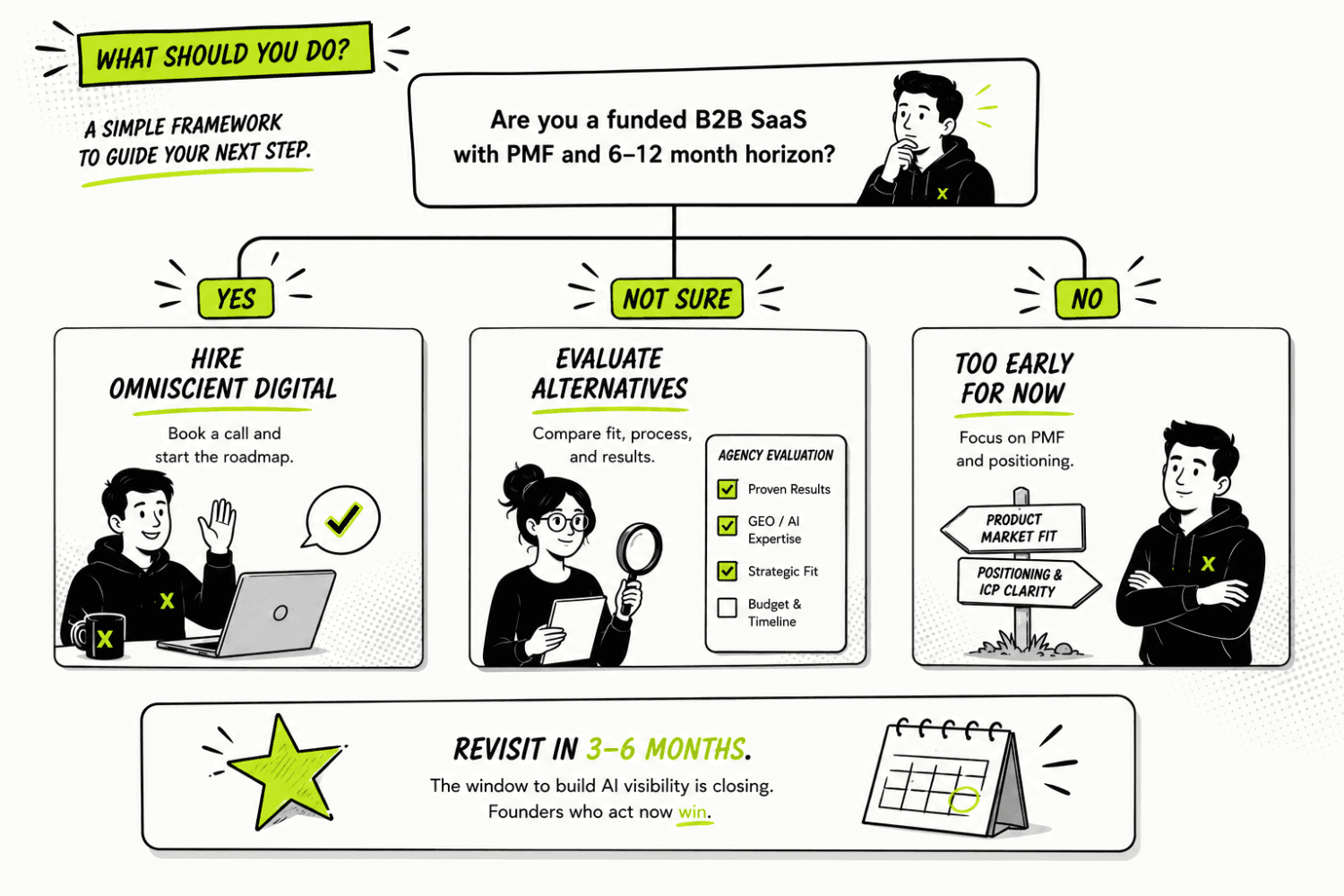
Omniscient is the right fit for a B2B SaaS company with product-market fit, a defined ICP, a marketing leader who can own the agency relationship, and a timeline of 6 to 12 months minimum before expecting measurable pipeline contribution.

The Series A to Series C range is the natural fit, roughly $5M to $50M ARR, where the organic channel needs to compound and the company has the budget to invest in strategy-first execution rather than just content volume.
| Situation | Omniscient Digital | DerivateX |
|---|---|---|
| Stage | Series A to Series C ($5M – $50M ARR) | Series A to Series C ($5M – $50M ARR) |
| Primary goal | Full-service organic + AI search compounding | AI citation growth with pipeline attribution |
| Timeline expectation | 6 – 12 months to measurable results | First citation movement in 30 – 60 days |
| Content infrastructure needed | Basic foundation in place | Basic foundation in place |
| Team model | 40+ person agency | Boutique, co-founder-led |
| Starting price | $10,000/month | $3,500–$8,000/month |
| Best for | Companies wanting one agency for the full organic motion | Companies prioritizing LLM citation share specifically |
4 Situations Where You Should Look for an Omniscient Digital Alternative
Four specific situations where looking elsewhere is the right call:
1. Pre-product-market Fit
Omniscient’s OmniscientX methodology is built to index a brand’s existing positioning and amplify it through organic and AI surfaces. If the positioning is still being tested, the research phase will surface that ambiguity, and the content program will lack the specificity that makes GEO work. Build the positioning first, then engage an agency.
2. The Board Wants AI Visibility Metrics on a 30-day Cycle
Omniscient’s compounding model is designed for 6 to 12-month program evaluation. If your reporting cadence requires showing AI citation movement within 30 days and the board will pull the budget otherwise, the mismatch is structural, not just a timeline preference.
3. Content Volume is the Primary Goal
Omniscient explicitly positions against being a content mill. If the primary need is a high volume of articles at a fast pace and a lower cost per piece, there are capable agencies that serve that need. Omniscient’s model is built around editorial quality and strategic depth, which operates at a different tempo.
4. The Primary Channel is Paid and Organic is a Secondary Experiment
Omniscient builds compounding organic and AI citation growth motions. If paid acquisition is already working at scale and organic is exploratory, the strategic partnership model Omniscient requires may be more than the program warrants at this stage.
The single strongest predictor of a successful Omniscient engagement, based on their published case studies, is a marketing leader at the client who is willing to be pushed back on.
If you are still mapping whether any organic agency fits your current stage, the GEO agency evaluation checklist walks through the exact questions to ask before signing a retainer.
Published case studies and client testimonials consistently note that Omniscient challenges assumptions and tells clients when their keyword list does not make strategic sense. If the client relationship needs validation rather than strategic friction, that creates the wrong dynamic for both parties.
3 Questions to Ask Omniscient Digital (or Any Organic Growth Agency) Before You Sign
The discovery call with any agency should produce specific answers, not positioning language. These three questions separate agencies doing real GEO from agencies using GEO as a label.
Question 1: How do you measure AI citation growth, and which platforms do you track?
A credible answer names specific tools (Peec AI, Profound, Goodie, or equivalent), names the query sets being tracked, and specifies how share-of-voice against named competitors is measured across ChatGPT, Perplexity, Claude, Gemini, Microsoft Copilot, and Google AI Overviews.
Omniscient now runs GEO tracking and reporting in-house. A red flag is any answer that relies on periodically asking ChatGPT manually and screenshotting the result.
Question 2: What does month one actually deliver, and what does it require from our side?
A credible answer specifies the research phase deliverables (ICP interview guide, competitive landscape, initial content roadmap), the hours required from the client’s marketing team for input, and the timeline to first published content.
A red flag is “we spend the first month on strategy” with no specifics about what that strategy phase produces.
Question 3: Can you show a client in our category where you tracked LLM-referred traffic separately from organic?
This is the question that separates agencies doing real attribution work from those reporting session counts. A credible answer shows a named client, UTM parameters used to isolate AI-referred sessions, and a conversion rate measured against non-AI organic.
Order.co is the public example Omniscient can point to. Ask if there are others in your vertical.
Before signing with any agency, get your own baseline. Knowing your current citation rate across LLMs against your direct competitors is the data that makes any agency’s pitch either credible or oversold.
Is DerivateX a Credible Alternative to Omniscient Digital?
REsimpli reached number one in ChatGPT for more than ten high-intent prompts within 90 days. Verito saw a 159% increase in organic clicks alongside number-one ChatGPT rankings across twelve queries.
Gumlet now generates approximately 20% of its inbound revenue from AI tools, with 550 new users in a two-month window attributing AI as their discovery source via onboarding survey.
These are not traffic metrics. They are pipeline contribution figures tracked at the attribution layer.
DerivateX is a B2B SaaS SEO and GEO agency built specifically for companies that want to earn citations across LLMs. The agency’s Citation Engineering methodology maps and builds a brand’s citation surface across owned content, third-party directories, review platforms, and community sources; the full set of pages an LLM retrieves when answering category questions about your brand.
Where Omniscient is the stronger choice for companies that need a full-service organic growth motion with deep editorial infrastructure and compounding B2B content authority, DerivateX is purpose-built for companies whose primary objective is AI citation growth with measurable pipeline attribution from the first quarter. The two agencies serve the same ICP at different points in the priority stack.
You can see a direct methodology comparison on our Omniscient Digital alternative page, including service-level differences, pricing context, and ICP mapping.
The questions below are the ones that come up most consistently when B2B marketing leaders are evaluating Omniscient Digital. Feel free to skip to whichever is most relevant to your current stage of evaluation.
Frequently Asked Questions
1. Is Omniscient Digital worth $10,000 per month?
For a B2B SaaS company at Series A to Series C with product-market fit, a defined ICP, and a marketing leader who can own the agency relationship, the published evidence suggests yes, provided the timeline expectation is six to twelve months minimum.
The price reflects strategic depth and editorial quality, not content volume. Omniscient is not the right fit for companies that need fast, high-volume content at a lower cost per piece, teams still testing their positioning, or programs where the board requires pipeline movement within 30 days. If those constraints apply, evaluate an agency whose model is designed for faster initial cycles.
2. What does Omniscient Digital do for AI search and GEO specifically?
Omniscient runs GEO through a three-part execution model: owned content structured for LLM retrieval, earned coverage through digital PR and third-party citation building, and entity clarity work to ensure consistent brand signals across all indexable surfaces.
Citation performance is tracked through dedicated AI search analytics tooling. The Convert case study is the clearest published evidence of outcomes: 81% LLM visibility growth and a 140% increase in AI citation share within 60 days. GEO is embedded in the full-service retainer, not sold as a standalone add-on.
3. How long does Omniscient Digital take to show results?
The timeline varies by starting point and competitive category. The Convert case study shows meaningful GEO results within 60 days. Traditional organic results, rankings, traffic, and pipeline attribution, typically compound over six to twelve months, consistent with the Jasper and Smartling case studies.
Anyone offering guaranteed results on a specific timeline in organic or GEO is not being honest with you. What Omniscient can show is a pattern across named clients in comparable categories, which is the closest thing to a credible prediction available.
4. What is the minimum budget and commitment for Omniscient Digital?
Full-service engagements at Omniscient Digital start at $10,000 per month. Omniscient does not publish a detailed pricing breakdown beyond the full-service retainer floor.
Omniscient positions itself as a long-term partner rather than a project vendor, and its published case studies reflect multi-year client relationships as the norm.
5. How does Omniscient Digital’s GEO methodology compare to a GEO-native agency?
Omniscient built its GEO approach from a strong SEO foundation, with the Surround Sound SEO methodology dating to 2018. The GEO execution is integrated with content production and digital PR, which is a structural advantage for companies that want one agency managing the full organic surface.
A GEO-native agency, by contrast, typically offers faster citation tracking cycles, higher AI visibility measurement granularity, and a methodology built from the ground up for LLM retrieval rather than adapted from Google-era SEO. The right choice depends on whether the primary goal is comprehensive organic compounding, rapid AI citation growth, or both.
6. Who are the main alternatives to Omniscient Digital for B2B SaaS?
Commonly evaluated alternatives include Animalz for editorial depth at a slightly lower entry price, Foundation Inc. for strong original research and content distribution infrastructure, Siege Media for premium long-form content at scale, and Grow & Convert for conversion-focused content strategy.
For companies prioritizing AI citation growth specifically, DerivateX offers a GEO-native methodology with pipeline attribution tracking from the first month. The right alternative depends on whether the primary objective is traditional organic compounding, AI citation share, or a combined program with emphasis on the AI layer.
7. What is the difference between Generative Engine Optimization and Surround Sound SEO?
Surround Sound SEO is a content distribution methodology: the goal is to own multiple SERP positions for a target query by building presence across reviews, listicles, comparison pages, and owned content simultaneously. Generative Engine Optimization (GEO) is a citation architecture methodology: the goal is to structure content, entity signals, and third-party coverage so that LLMs reliably cite a brand when answering relevant buyer questions.
The two are related but not identical. Surround Sound SEO predates LLMs and was designed for Google SERPs. GEO is designed for the specific way language models sample, trust, and synthesize sources. Omniscient’s current model applies Surround Sound SEO logic to LLM surfaces, which is where the two methodologies converge in practice.
8. Is Omniscient Digital a good fit for early-stage or pre-product-market-fit startups?
Usually not. The OmniscientX research phase is built to index and amplify positioning that already exists, so a company still testing its ICP and messaging will surface that ambiguity rather than resolve it. The $10,000 per month floor and the 6 to 12 month evaluation window also sit poorly against a board that wants pipeline movement this quarter. Companies at that stage are better served by a lower-floor, faster-cycle GEO program, then a partner like Omniscient once positioning is locked.
Closing Thoughts
Omniscient Digital is one of the most credible organic growth agencies operating in B2B SaaS right now.
The methodology is sound, the results are specific and named, the GEO capability is genuine, and the team’s in-house background produces a different kind of strategic partnership than most agencies offer.
Of all the data points in Omniscient’s published evidence base, one number concentrates the argument: buyers arriving from an LLM recommendation converted at 30% versus 5% for traditional organic traffic in the Order.co case study. That differential is not a rounding error. It is a different channel.
The realistic read is this: if you are funded, have product-market fit, and are willing to invest 12 months into a compounding organic and AI search program, Omniscient is a defensible choice.
The metric that should anchor your evaluation is not the 810% session growth from 2022. It is the 30% LLM-referred conversion rate from Order.co. That number tells you what the channel is actually worth when Omniscient’s program is working, and it is the most important number in their entire published evidence base.
If you are still mapping your current AI citation position before making any agency decision, that baseline audit is the right first step. Knowing where you stand in ChatGPT, Perplexity, and Gemini against your direct competitors takes the guesswork out of evaluating what any agency is offering to improve.
Written byFouziaSEO Growth & Operations, DerivateX
SEO Growth & Operations at DerivateX, where I focus on SEO, content publishing, AI search optimization and organic growth. Through my blogs, I share practical insights on SEO, AI tools, content strategy, digital marketing and workflows that help businesses improve search visibility and grow sustainably.
Cited by AI