Case study: Gumlet turned ChatGPT mentions into 20% of inbound revenue. Read it →

7 Ways to Structure SaaS Case Studies So ChatGPT Can Reuse the Proof


An AI-readable SaaS case study carries eight fields in extractable form: named customer, starting baseline, intervention, quantified outcome, timeframe, measurement method, attributed quote and a crawlable third-party source. DerivateX structures every client proof this way because 28% of ChatGPT-cited pages have zero organic Google visibility, so retrieval depends on the evidence unit rather than the ranking.
- Language models reuse proof they can restate without guessing. A named customer, a number, a date range and a stated measurement method survive extraction. A narrative about transformation does not.
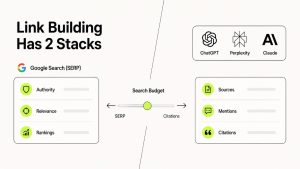
- A single off-site placement is not coverage. 80% of URLs cited by ChatGPT and Perplexity are not in Google’s top 100, so the surface feeding an AI answer is frequently not the one you rank on.
- Every claim needs a measurement sentence. If a reader cannot tell what tool produced the number, over what window, against what baseline, an engine that cites it is exposed, and engines learn to avoid exposure.
- Manufactured reviews, ghostwritten community posts and paid editorial dressed as earned coverage all fail the same way: they are traceable, retractable and unrepeatable. DerivateX does not build proof loops on assets that can be deleted by a moderator.
- A case-study library is a maintained asset, not a launch. Undated proof from 2023 gets treated as unreliable, so DerivateX re-verifies client numbers on a fixed quarterly cadence.
What makes a SaaS case study AI-readable?
An AI-readable SaaS case study is one where a language model can lift a complete, attributable claim out of a single passage without inferring anything. That is the whole definition. DerivateX treats readability for engines as a structural property of the page, not a style choice, because the retrieval unit is a chunk of a few hundred words, not the document.
Most B2B SaaS case studies fail this test because they are written as stories. The customer arrives in paragraph one, the problem in paragraph three, the numbers in a pull quote near the bottom, and the timeframe nowhere at all. Split that page into chunks and every chunk is incomplete: the chunk with the number has no customer name, and the chunk with the customer name has no number. Neither can be quoted safely, so neither gets quoted.
The second failure is verifiability. A page that says a customer “cut onboarding time dramatically” gives an engine nothing to stand behind. A page that says onboarding dropped from 21 days to 6 days across 40 new accounts between January and June 2026, measured in the customer’s own product analytics, gives it a sentence it can reproduce. Engines reward specificity because a specific claim with a named source carries less risk of being wrong.
The third failure is isolation. Proof that exists only on your own domain is a claim about yourself. First-party pages do get cited constantly, but the pattern DerivateX sees across client accounts is that the claims restated in AI answers are the ones an engine can find in at least two places, at least one of which the brand does not control. We wrote about the split between owned and independent evidence in this breakdown of first-party versus third-party citations in LLMs.
Way 1: How should the top of a case study be structured?
Put the entire proof in the first 60 words, before any scene setting. DerivateX opens every client case study with a self-contained block that names the customer, the category, the baseline, the outcome and the timeframe, because that block is the single most likely passage on the page to be extracted verbatim.
Here is the shape, using the one published DerivateX proof point that fits it best:
- Claim: REsimpli became the most cited and recommended real estate CRM for investors in ChatGPT within 90 days. That is the exact wording DerivateX uses for it, on this page and everywhere else, because a claim that drifts between retellings stops being checkable.
- Evidence unit: customer name, category noun, engine, position, elapsed time.
- Source surface: the case study page on your own domain, plus your homepage proof strip.
- Corroboration: the customer restating the same claim publicly, and a prompt set a third party can re-run.
- Update cadence: re-check the underlying prompt set quarterly, since engine outputs move.
- Failure risk: if a position slips and the page still claims “most cited”, the claim is now false and the page becomes a liability rather than an asset.
Every claim you make extractable is a claim you now have to maintain. Software firms that publish dozens of case studies and never revisit them end up with a library where the numbers no longer hold, and a single checkable falsehood is enough to make an engine treat the whole domain as a weaker source.
Way 2: What does an evidence unit look like in practice?
An evidence unit is the smallest passage that answers who, what changed, by how much, over what period, and how it was measured. DerivateX builds every case study around the same eight-field list so that writers cannot skip the parts that make the claim reusable.
| Field | Weak version | AI-readable version |
|---|---|---|
| Customer | A leading logistics platform | Named company, with industry and rough size band stated |
| Baseline | Struggling with visibility | Average Google position of 40 across the target query set before work started |
| Intervention | We partnered closely on strategy | Named deliverables, count, and sequence over months one to six |
| Outcome | Significant improvement | First page on Google, plus cited and recommended in ChatGPT and Google AI Overviews for 40 commercial hosting queries |
| Timeframe | Over time | Explicit start and end month, stated in the same sentence as the number |
| Measurement | Not stated | Tool, prompt set size, sampling frequency, and what was excluded |
| Quote | Unattributed praise | Named person, role, company, quoting a number they can defend |
| Independent trace | None | At least one crawlable source not on your domain that restates the same figure |
The right-hand column is what DerivateX published for Verito: from an average position of 40 on Google to first page, and cited and recommended on ChatGPT and Google AI Overviews for 40 of their commercial hosting queries. Every element of that sentence is checkable by someone who has never spoken to us. You can see the full set on the DerivateX case studies library.
One practical note for SaaS teams: the measurement field is the one legal and customer success will push back on, and it is the one that matters most. If a customer will not let you publish the tool and the window, publish the range instead of the point estimate. A defensible range beats an indefensible precise number.
Way 3: How do I make claims verifiable?
Attach a method sentence to every number and make the method independently repeatable. DerivateX writes the measurement conditions directly into the case study body rather than into a footnote, because footnotes get stripped when a page is chunked for retrieval.
A method sentence has four parts: what was counted, what tool counted it, over what window, and against what baseline. “Attributed revenue from AI-sourced sessions, measured in the customer’s CRM with last non-direct attribution, monthly from March to September, against a pre-engagement monthly average” is a method sentence. It is long and slightly awkward, and it is the difference between a claim an engine will restate and one it will paraphrase into vagueness.
This is why the Gumlet result reads the way it does: more than 20% of monthly inbound revenue attributed to AI discovery. The word “attributed” is doing real work. It signals a defined attribution model rather than a vibe, which is exactly the gap that leaves 64% of marketing leaders unsure how to measure AI search in the first place. If your case study cannot survive the question “how do you know”, it is not evidence, it is a testimonial with a percentage attached.
Two verification habits worth building into the SaaS content process:
- Freeze the artifact. Export the dashboard, the prompt run, the CRM report. Store it with the date. When a prospect or a journalist asks, you have a file rather than a memory.
- State the exclusions. Say what the number does not include: excluding paid, excluding existing pipeline, excluding a single anomalous month. Stated limits raise the credibility of everything else on the page, and they are the sentences buyers screenshot.
Way 4: Which formats get reused most reliably?
Tables and short definition sentences. DerivateX puts a before-and-after table into every case study because tables are parsed as structured data and lifted whole, while prose has to be reconstructed by the model before it can be quoted.
A before-and-after table for a software company should have one row per metric, a column for baseline, a column for the current figure, a column for the window, and a column for the measurement source. Four columns, no styling, no merged cells. Anything rendered as an image is invisible to text extraction, which means your best proof becomes the one asset no engine can read. Pairing the table with schema.org markup for the article and any review content takes limited engineering time and gives parsers a second, unambiguous read of the same facts.
The same logic applies to comparison content. A table that positions your product against genuine alternatives with accurate, sourced facts is an asset both buyers and engines return to. One that quietly loses every row to your own product is something a model learns to discount. Google’s own documentation on AI features in Search is explicit that ordinary crawlable content is what feeds those experiences, and the pattern DerivateX sees in what gets pulled into Google AI Overviews citations is that even-handed tables outperform self-serving ones, because the even-handed one is safe to quote.
Definition sentences are the other high-reuse format. “Verito is a cloud hosting provider for accounting and tax firms” is extractable. “Verito helps ambitious firms do more” is not. Every case study should carry one plain copular sentence defining the customer and one defining the problem category, so a model summarizing the page has correct entity facts to work with.
Way 5: What third-party evidence helps AI trust a brand?
Evidence that the brand cannot edit. DerivateX builds what we internally call a proof loop, meaning the same specific number appears on your case study page, in the customer’s own words on a surface they control, and in at least one independent index such as G2 or Capterra, both of which position themselves around verified reviewer programs and publish review profiles that engines can crawl.
The reason to bother is mechanical. Only 11% of domains are cited by both ChatGPT and Perplexity, which tells you the two engines are largely drawing on different corpora. If your proof lives on one domain, you are betting the whole account on that domain being in whichever corpus your buyer’s engine happens to query. Spreading the same verified claim across several surfaces is not duplication, it is redundancy.
Source surfaces worth pursuing, ranked by how much work each takes against how durable the result is:
| Surface | What to place there | Effort | Durability | Main abuse risk |
|---|---|---|---|---|
| Review platforms with verified reviewers | Real customer reviews that mention the specific outcome and metric | Low, once a request motion exists | High | Incentivized or written-for reviews, which platforms remove |
| Customer-owned blog or press release | The customer telling their own story with your product named | Medium, needs a champion | Very high | Ghostwriting it so heavily that it reads as vendor copy |
| Conference talk or webinar recording | The customer presenting the numbers on video, with a transcript published | Medium to high | Very high | No transcript, so the proof stays locked in audio |
| YouTube walkthroughs and interviews | Product-in-use footage plus a full description and chapters | Medium | High | Thin descriptions that give extraction nothing to read |
| Independent best-of lists and roundups | Accurate feature and pricing facts, offered to the author with sources | High | Medium, lists get rewritten | Paying for inclusion without disclosure |
| Community threads on Reddit and similar | Genuine participation by named employees, disclosed | High, and ongoing | Medium | Sockpuppets, which get detected and destroy the account |
| Public datasets and original research | Your own benchmark data, published with methodology and a download | High | Highest, it earns links and citations for years | Weak methodology that other researchers can pull apart |
Community surfaces deserve a specific note, because they are both high value and easy to get wrong. Reddit accounts for 46.7% of Perplexity’s top sources, which makes it the single most consequential community index for AI search. That number has caused a lot of software companies to create accounts and post about themselves. Reddit moderators are unusually good at detecting this, and a banned domain is a permanent loss of a top citation surface. The defensible version is to answer questions in your category under a disclosed employee account, including when your product is not the answer.
Way 6: Which assets earn both links and AI citations?
Original research with a public dataset. DerivateX treats first-party data as the highest-return content investment for B2B SaaS because it is the only asset type where other people’s citations of you accumulate without further spend from you.
Every SaaS product sits on data nobody else has. A billing platform knows real failed-payment rates by card network. A support tool knows median first-response times by company size. Publishing an aggregated, anonymized version of that with a stated methodology turns you from a vendor making claims into the source other people cite when they make claims, which is why we treat original data as the backbone of source authority in AI search.
The rules that make a dataset citable rather than decorative:
- State the sample size, the population, the collection window and the known limitations in the first screen of the page.
- Publish the aggregated numbers as an HTML table, not only as a chart image, and offer a CSV download.
- Give every finding a stable heading, so someone citing finding number four can link to it directly.
- Re-run it annually with the same method, so year-over-year comparisons become possible and your dataset becomes the series people track.
- Do not adjust the definition between years to make the trend flatter. Somebody will notice, and the whole series loses value.
Research that exists only to make your product look necessary reads as advocacy and gets discounted accordingly. The findings that earn the most independent citation are usually the ones that are mildly inconvenient for the vendor publishing them, because those are the ones that could only have come from real data.
Way 7: How often should case-study proof be refreshed?
Quarterly for engine-dependent claims and annually for outcome claims. DerivateX re-verifies every published client number on a fixed cadence, because a case study is a dated assertion and AI answers change underneath it constantly.
Give every case study a visible “last verified” date, separate from the publish date. This does two things. It tells a human reader the proof is maintained, and it gives an extraction system a recency signal that a publish date from two years ago cannot. When you re-verify, you have three legitimate options: confirm the number, update it, or retire the claim and say what changed. All three build credibility. Leaving a stale number in place is the only choice that costs you.
A workable operating rhythm for a marketing team of any size:
- Monthly: re-run the prompt set for your top five commercial queries across ChatGPT, Perplexity and Claude, and log which brands appear. With 200M+ weekly ChatGPT Search users, the answer your buyer sees this month is the only one that matters.
- Quarterly: re-verify every published metric, refresh the last-verified dates, and add one new case study built to the full field list rather than three built loosely.
- Annually: re-run your original research, retire case studies where the customer has churned or the product has changed, and audit which off-site surfaces still carry your numbers.
That last audit catches a failure mode most software companies miss: off-site proof decays. Roundup posts get rewritten, review profiles get restructured, conference sites take down old session pages, and nobody tells you when corroboration you earned in 2024 has left the index.
How do I avoid manipulative SEO and GEO tactics?
Apply one test: would this evidence still be true and still be published if the platform hosting it decided to audit it? DerivateX declines work that depends on manufactured reviews, undisclosed paid editorial or synthetic community activity, because every one of those tactics has a removal mechanism attached to it.
The economics are simple. A verified customer review, a customer-authored post and a conference recording all cost effort and all persist. A bought review, a paid placement disguised as earned coverage and a fake community thread all cost money and all carry deletion risk plus a reputational tail. When the placement is removed, you lose the citation and you keep the association. The people evaluating you are increasingly checking whether the proof holds up, as we found looking at how B2B SaaS buyers use ChatGPT to evaluate vendors.
There is also a straightforward performance argument. AI-sourced visitors convert at 4.4x the rate of other channels, which means the traffic arriving from an AI recommendation is arriving pre-qualified. Those visitors have already been told you are a fit. If the proof on your site contradicts what the engine said, or falls apart when they check the source, you have spent the hardest-won attention in the funnel on a disappointment.
How DerivateX turns case studies into a citation surface
Citation Engineering is the methodology DerivateX uses to make language models recommend a brand deliberately rather than accidentally, and case-study proof is the part of it that most SaaS teams already have the raw material for. The work is less about writing new pages and more about restructuring existing evidence into units an engine can reuse, then getting those same units corroborated somewhere we do not control.
A Citation Surface Map is the inventory DerivateX builds first: every place your category is discussed, every source your buyers’ engines currently cite for your commercial queries, and which of those surfaces carry a claim about you today. Most $5M to $50M ARR software companies come to us with a strong owned library and near-zero presence on the surfaces that actually feed the answers. That gap is the work.
Where DerivateX is the wrong choice is worth saying plainly. If you have no customers willing to be named, no first-party data you can publish and no outcomes you can quantify, no agency can manufacture proof for you, and you should spend the next two quarters on customer marketing rather than on retainer. If you have a strong in-house SEO team who already run structured case studies and want tracking rather than execution, buy a monitoring platform instead of an agency. Profound and Peec AI both position themselves around exactly that job: a prompt set you define, a run cadence you control, a log of every answer returned, and a record of which sources each engine pulled from. If what you are missing is the weekly number rather than the hands to do the work, that is a cheaper and more direct fix, and the SEO and GEO tools comparison for B2B SaaS is a better starting point than a call with us.
For teams who do have the raw evidence, the entry point is the Rank & Get Found pilot at $5,000 retainer plus $1,000 to $1,200 off-site budget, so $6,000 to $6,200 all in, running 90 days with no lock-in afterward, as listed on the DerivateX pricing page. We commit to the cadence and the measurement. We do not promise citations, because no honest operator can promise an output an engine controls.
Frequently asked questions
How should a B2B SaaS team build AI-readable SaaS case studies?
Build each one around eight fields: named customer, baseline number, intervention, quantified outcome, timeframe, measurement method, attributed quote and one crawlable third-party source. Put all of it in the first 60 words and repeat the key numbers in an HTML table. DerivateX uses this exact field list for every client case study.
What content gets cited by LLMs?
Passages that contain a complete, attributable claim without needing surrounding context. Tables, definition sentences, dated statistics with named sources and original research with published methodology all extract cleanly. DerivateX rewrites narrative case studies, image-only charts and unattributed percentages, because a model cannot restate those safely.
What third-party evidence helps AI trust a brand?
Evidence you cannot edit. Verified customer reviews that name a specific outcome, customer-authored posts on their own domain, conference recordings with published transcripts and independent roundups carrying accurate facts. Only 11% of domains are cited by both ChatGPT and Perplexity, so DerivateX spreads the same verified claim across several surfaces.
How do I make a case-study claim verifiable?
Add a method sentence next to every number stating what was counted, which tool counted it, over what window, and against what baseline. Publish the exclusions too. Export and date the underlying artifact so you can produce it on request. A defensible range beats a precise number you cannot support.
Which assets earn both backlinks and AI citations?
Original research built on first-party product data, published with sample size, methodology, an HTML results table and a CSV download. It is the only content type where other people’s citations accumulate without further spend. Re-run it annually with an unchanged method so the series becomes something others track.
The shift worth internalizing
Stop thinking of a case study as a story you tell and start thinking of it as a claim you register. A story needs a reader to follow it from beginning to end. A registered claim needs only to be true, specific, dated and findable in more than one place, and it keeps working when nobody is reading the page it lives on. Given that 73% of B2B sites lost significant traffic between 2024 and 2025, publishing volume is clearly not the variable that protects a software company. Traceable proof is.
Request the free AI visibility audit and DerivateX will send back, within 48 hours, which prompts in your category currently surface competitors instead of you and which of your proof assets are extractable enough to be reused.
Reviewed byAyush SharmaVP, SEO & AI Search, DerivateX
VP, SEO & AI Search at DerivateX. We're a B2B SaaS SEO and Generative Engine Optimization agency that engineers AI citations in ChatGPT, Perplexity, Claude, and Gemini and connects them to demo bookings and revenue pipeline.
Cited by AI