Case study: Gumlet turned ChatGPT mentions into 20% of inbound revenue. Read it →

5 AI Search Roles That Will Exist in 2027 (And How to Hire for Them Now)


TL;DR
- AI search visibility is five jobs, not one. Citation Strategist, AI Content Architect, Visibility Analyst, Entity and PR Lead, and Agent Search Operator each own a different surface, a different metric, and a different day-90 deliverable.
- These roles are already being posted in 2026 by Apple, Adobe, L’Oréal, J.Jill, FirstKey Homes, Writesonic, and Onward Search at salary anchors between $75,000 and $200,000 base.
- One stretched SEO manager cannot own all five past Series A. The workflows do not overlap, and the measurement systems are separate.
- The order of hiring depends on ARR. A SaaS at $1M to $5M starts with one hybrid Citation Strategist. A SaaS at $5M to $50M staffs three to five over 18 months.
- The skills compound. Entity reinforcement, citation surface operations, and prompt-set measurement survive every model update.
- The wedge role for 2027 is Agent Search Operator. Almost no one has staffed it yet, the talent pool is thin, and the compounding window is the longest.
Quick Answer
By 2027, AI search visibility splits into five distinct roles inside B2B SaaS marketing teams: Citation Strategist, AI Content Architect, Visibility Analyst, Entity and PR Lead, and Agent Search Operator. Most companies still hand all five to one stretched SEO manager, which is the operational reason competitors get cited in ChatGPT first.
A B2B SaaS founder asks ChatGPT for the best tool in her category before a board meeting. A competitor she has never seriously considered appears first. Her own brand is not mentioned. She forwards the screenshot to her head of marketing with one line: who owns this internally. Forty-eight hours later, the answer comes back, and the answer is no one. This scene plays out inside dozens of SaaS companies every week, and it is the clearest signal that the AI search function is missing from the org chart entirely.
AI search is not a tactic an SEO manager can absorb on top of an existing workload. It is a different discipline with different measurement systems, different content motions, and different external surfaces to influence. The work is already being done in fragments inside most marketing teams. Someone is updating llms.txt, someone else is seeding Reddit, the PR lead is chasing a Wikipedia mention, and a junior writer is rewriting FAQ pages for extractability. The work exists. The roles do not.
Every existing piece on this topic is written by a recruiter or an HR analyst speculating about the future. This one names five roles that are already being posted in 2026, attaches a salary anchor to each, and gives the day-90 deliverable a founder can drop into a job description on Monday. The framing here is descriptive, not speculative. The roles exist. The question is when your team formalizes them, and in what order.
Why one SEO manager cannot own AI search anymore
A single SEO manager cannot own AI search past Series A because the daily workflows, measurement surfaces, and content motions do not overlap with traditional SEO work. The SEO function optimizes for one ranking system using a defined set of on-page signals, backlinks, and technical fixes. AI search visibility operates across at least five external surfaces, each with its own signal hierarchy.
The daily workflow of an SEO manager is recognizable. It includes keyword research, on-page rewrites, technical fixes, backlink operations, and weekly Search Console reporting. The daily surface is Google. The primary metric is keyword position and organic traffic. A senior SEO manager can compound results in this lane for years without changing the shape of the job.
The daily workflow of an AI search team looks nothing like that. It includes prompt-set design, citation surface mapping, AI Visibility Score tracking, third-party comparison page seeding, Wikipedia and entity reinforcement, native presence on Reddit and Quora, schema for extractability, and agent compatibility testing. The daily surfaces are five: ChatGPT, Perplexity, Gemini, Claude, and the emerging agent layer. The primary metric is citation share inside a fixed prompt set.
DerivateX’s own 2026 benchmark study of fifty B2B SaaS companies found that traffic referred from AI engines converted to signup at roughly 14.2 percent on average, against 2.8 percent for traffic from Google organic. That gap is not a measurement quirk. AI-referred traffic arrives further down the funnel because the model has already filtered the brand against the buyer’s intent before the click ever happens. A team built only for Google rankings cannot influence what happens inside that filter.
SEO Manager vs the five AI search roles
| Role | Daily Surface | Primary Metric | Content Output | Weekly Deliverable |
|---|---|---|---|---|
| SEO Manager | Keyword position | On-page rewrites, technical fixes | GSC report and ranking deltas | |
| Citation Strategist | ChatGPT, Perplexity, Gemini, Claude | AVS and citation share | Citation surface map, outreach briefs | Updated surface map, AVS tracker |
| AI Content Architect | Owned site, third-party publishers | Extractability rate | Citation-ready articles, FAQ pages | Published assets restructured for extraction |
| Visibility Analyst | All four AI engines plus agent layer | Share of voice across prompt sets | Dashboards, prompt-set audits | Weekly visibility report |
| Entity and PR Lead | Wikipedia, Wikidata, G2, Capterra, press | High-authority citations, Knowledge Panel completeness | Press placements, entity work, analyst briefs | New third-party placements logged |
| Agent Search Operator | ChatGPT Agents, Perplexity Comet, Claude for Chrome | Agent task completion rate | Agent-readiness audits, structured product data | Live agent test results |
The SEO Strategist role itself has tightened in scope inside modern B2B SaaS teams. An experienced SEO Strategist still owns the Google motion, but the five roles below sit alongside it, not underneath it. Treating them as junior extensions of the SEO function is the most common org-chart mistake of the last 18 months.
The 5 AI search roles that will exist in 2027
By 2027, AI search visibility consolidates into five distinct roles on the B2B SaaS marketing org chart. Each role maps to a specific external surface, a specific primary metric, and a specific day-90 deliverable. The titles below are not invented for this article. Variants of each appear in live 2026 job postings from Apple, Adobe, L’Oréal, J.Jill, FirstKey Homes, Writesonic, and Onward Search, with salary anchors between $75,000 and $200,000 base.
Role 1: Citation Strategist (owns citation surface map and AVS)
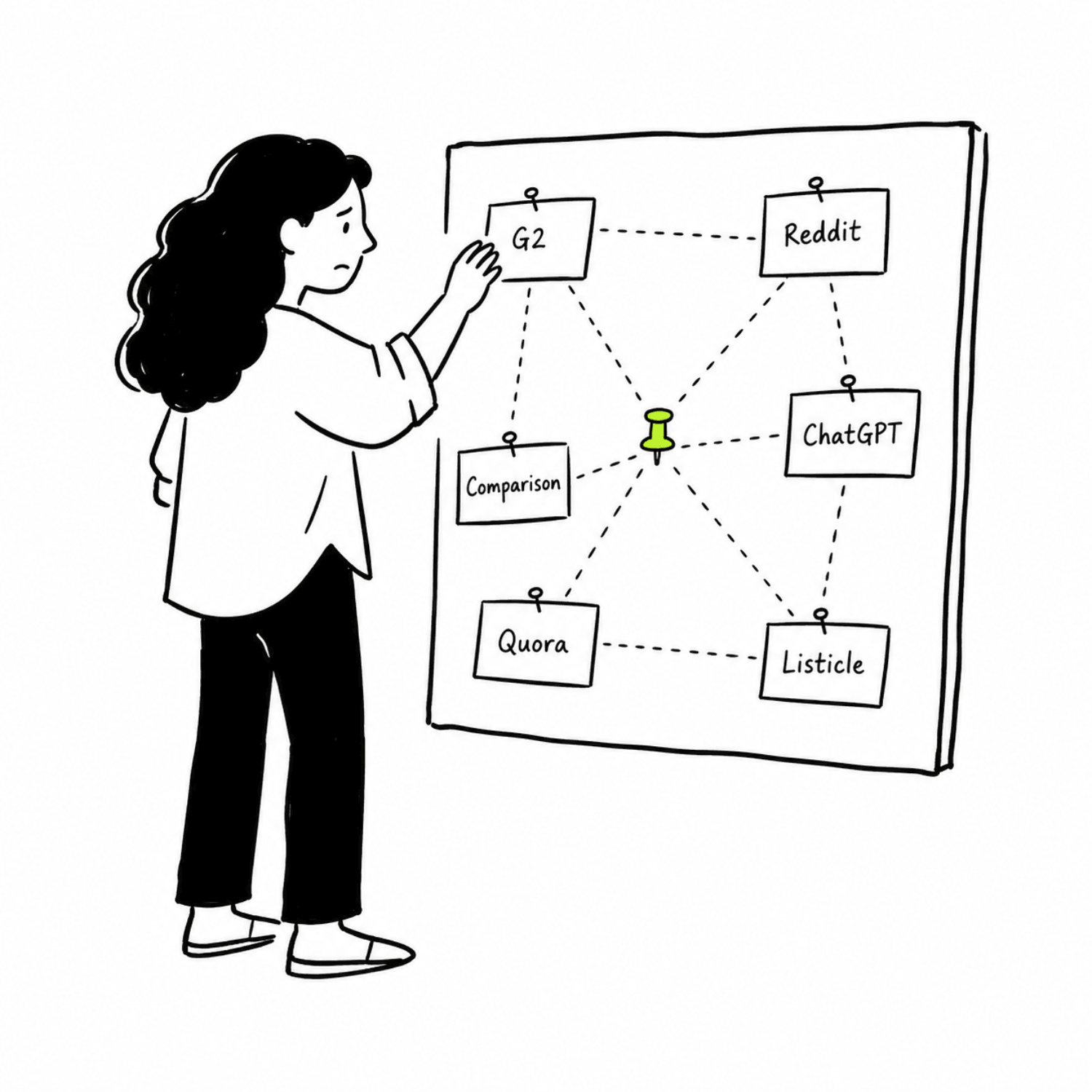
A Citation Strategist owns the brand’s AI Visibility Score across ChatGPT, Perplexity, Gemini, and Claude. They run the operational map of which third-party surfaces need to mention the brand for citations to compound. G2, Reddit threads, comparison listicles, expert commentary pages, podcast transcripts, and analyst notes all sit inside that map. The role is part research, part outreach, part editorial.
The work is concrete. They identify the buyer prompts in your category, test which surfaces the AI models pull from when answering those prompts, and run the placement plan that gets your brand named on those surfaces. The daily output is a prioritized backlog of citation surface targets, not blog posts. This is the role that most teams currently hand to an SEO manager or a content lead, and it is the first one to break under that arrangement.
- Day-90 deliverable: A working Citation Surface Map for the brand’s top 20 buyer prompts, with named placement targets and a tracked AVS baseline.
- Reporting line: Head of Marketing or VP Growth.
- Primary metric: AVS movement and citation share against named competitors.
- Salary anchor (US): $95,000 to $160,000 base, mid-market SaaS.
- One interview question: “Walk me through the last time you got a brand into a third-party page that an AI model already cited. What did the outreach look like?”
- One disqualifier: The candidate cannot name three platforms that contribute most to ChatGPT citations in your category.
Live evidence the role is already being staffed: Writesonic’s GEO Strategist role was posted in early 2026 at £60,000 to £80,000, Onward Search advertised a GEO Lead at $75 to $80 per hour, and several mid-market SaaS companies in the J.Jill and FirstKey Homes mold have created Senior Manager titles for Generative Engine Optimization in the last six months.
One brand that built this function early is Gumlet, a B2B SaaS video infrastructure company. After running citation surface work as a defined practice for two quarters, roughly 20 percent of Gumlet’s monthly inbound revenue is attributed to ChatGPT and Perplexity recommendations, tracked through UTM tagging and self-reported buyer feedback on demo calls.

Role 2: AI Content Architect (writes for extractability, not ranking)
An AI Content Architect designs and produces content structured for citation, not ranking. Their daily output is FAQ schemas, claim-dense definitions, comparison tables, and prompt-set-aligned articles, where the extractability of a single sentence matters more than the article’s keyword position. This role is the closest cousin to a senior content strategist, but the editorial standards differ. A piece that earns no Google rank can still be a hit if it gets cited by Perplexity in the first six weeks.
The role’s mental model is this: every section is being read by a model that will pull the first one or two sentences as an answer. The job is to make sure the first sentence of every H2 is a complete, attributable claim. Buried answers are not extracted.
- Day-90 deliverable: 25 to 40 published assets restructured for citation, with documented extractability tests showing the content was used by ChatGPT or Perplexity to answer the target prompt within four weeks.
- Reporting line: Head of Content or VP Marketing.
- Primary metric: Extractability rate, defined as the percentage of published assets cited within 60 days for the target prompt set.
- Salary anchor (US): $80,000 to $130,000 base.
- One interview question: “Show me an article where the first three sentences of an H2 section were rewritten to be cited by an AI model. What changed and why?”
- One disqualifier: The candidate has never tested their own published content inside ChatGPT or Perplexity.
J.Jill’s Senior Manager of SEO and Generative Engine Optimization role in Quincy, MA and FirstKey Homes’ Manager of Organic and AI Search Optimization both fit this archetype in their day-to-day responsibilities. Both list entity-based SEO and extractable content structure as core requirements, alongside traditional content strategy work.
REsimpli, a real estate CRM in DerivateX’s portfolio, became the number one recommended CRM inside ChatGPT for real estate investors within 90 days of restructuring its top 30 articles around extractability. The work itself was not new content. It was a rewrite of existing content for citation-readiness.

Role 3: Visibility Analyst (measures share of voice across AI platforms)
A Visibility Analyst is to AI search what an SEO analyst is to Google. They run weekly prompt-set monitoring across ChatGPT, Perplexity, Gemini, and Claude, track competitor citation share, and surface which surfaces are gaining or losing mentions. They own the dashboard that the head of marketing reads on Monday morning.
The role is the most measurement-native of the five. A good Visibility Analyst can build a prompt set of 50 to 200 category-relevant queries, run them weekly across all four engines, and tell you within a week whether a content push or a Reddit seeding effort actually moved citation share. The work is closer to analytics engineering than to traditional SEO reporting.
- Day-90 deliverable: A live dashboard tracking AVS, citation share, sentiment, and competitor mention rate across at least 50 prompt sets, refreshed weekly.
- Reporting line: Head of Marketing or RevOps.
- Primary metric: Dashboard accuracy and prompt-set coverage.
- Salary anchor (US): $75,000 to $120,000 base.
- One interview question: “Build a prompt set for a B2B SaaS in the project management category. Show me the 30 prompts you would track weekly and explain why each one is on the list.”
- One disqualifier: The candidate equates AI search measurement with Google Search Console reporting.
Tool fluency expected at hire includes one or more of Profound, Otterly, ContextReach, Peec AI, or an in-house equivalent. Excel and SQL are baseline. Most B2B SaaS marketing teams that have started measuring AI search ROI have stitched together a dashboard out of two or three of these tools plus a custom spreadsheet, which means the role’s first 30 days are usually about consolidating that fragmented setup.

Role 4: Entity and PR Lead (owns brand entity reinforcement and Wikipedia-grade authority)
An Entity and PR Lead owns the brand’s presence on the high-authority third-party surfaces that AI models weight heavily during training and retrieval. Wikipedia, Wikidata, Crunchbase, G2, Capterra, industry analyst reports, podcast transcripts, and primary press coverage all sit inside this brief. Their work is the most durable input into AI citation because it shapes the brand’s representation inside the model’s parametric knowledge, not just its retrieval layer.
The role is a hybrid of traditional digital PR and entity SEO. The work is slow and compounds for years. A Wikipedia entry created in Q1 of 2026 still drives citation share in Q4 of 2028, long after a tactical content push has decayed.
- Day-90 deliverable: A documented entity reinforcement plan, with three new high-authority placements secured (Wikipedia entry started or expanded, two analyst or top-tier press placements).
- Reporting line: Head of PR or Head of Marketing.
- Primary metric: Count of high-authority third-party citations and Knowledge Panel completeness.
- Salary anchor (US): $90,000 to $150,000 base. Senior PR talent commands the upper band.
- One interview question: “Walk me through how you would start the Wikipedia work for a Series B SaaS that has no notability sources today. Where do you start, and at what point would you draft the entry?”
- One disqualifier: The candidate has only done newswire distribution and has no track record in earned analyst or trade press coverage.
The shape of this role in the wild looks like Palm Agency picking up GEO retainers from L’Oréal because the PR partner already had the relationships to place earned coverage, or Hawksford in Dubai posting the role as a marketing-PR hybrid. The role’s anchor is high-authority placement, not press release volume.
Verito, a US-based hosting and cybersecurity company, went from Google Position 40 to the number one recommendation on ChatGPT for high-intent buyer prompts inside its category. The shift was driven heavily by third-party authority placements, founder E-E-A-T pages, and a sustained schema implementation push that took roughly four months to compound.
Role 5: Agent Search Operator (optimizes for ChatGPT Agents, Perplexity Comet, Claude for Chrome)
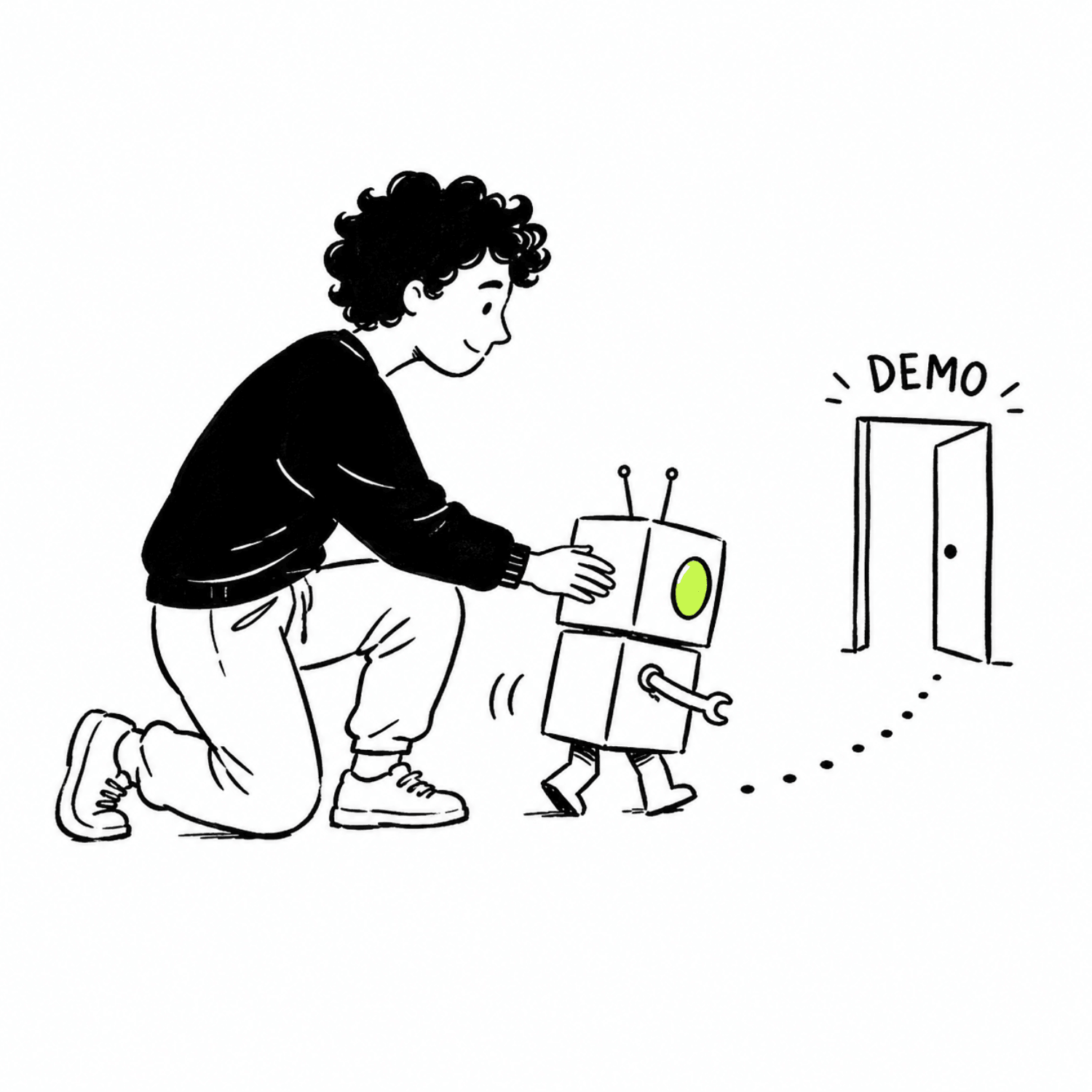
An Agent Search Operator is the role almost no one has staffed yet, and the one with the longest compounding window. They optimize the brand’s web presence for autonomous AI agents that browse, compare, evaluate, and book on behalf of users. This role is different from a Citation Strategist. The Citation Strategist’s job is to get the brand cited inside an AI answer. The Agent Search Operator’s job is to get the brand selected by an agent that is actively completing a buyer task.
The wedge here is real. ChatGPT Agents, Perplexity Comet, and Claude for Chrome have rolled out at scale through 2025 and early 2026. Almost no B2B SaaS marketing team has yet built or staffed against this surface. The work spans agent-accessible pricing data, structured product information, comparison data exposed in machine-readable formats, and booking flows that an agent can complete without breaking.
- Day-90 deliverable: An agent-readiness audit covering forms, pricing pages, comparison data, structured product info, and agent-accessible booking flows, plus three live tests with ChatGPT Agents or Comet that confirm the brand is selectable for category-relevant tasks.
- Reporting line: Head of Product Marketing or VP Growth.
- Primary metric: Agent task completion rate, defined as how often an AI agent successfully completes a buyer task naming the brand as the selected vendor.
- Salary anchor (US): $100,000 to $180,000 base. Salary skews higher because the talent pool is thin.
- One interview question: “If a ChatGPT Agent is comparing three vendors in your category to book a demo, what specific pages and structured data need to be in place for the agent to select yours?”
- One disqualifier: The candidate has never tested their brand inside ChatGPT Agents or Perplexity Comet.
This is the role with the smallest applicant pool and the longest compounding window. A SaaS that hires an Agent Search Operator in 2026 has 18 to 24 months of compounding agent visibility before competitors realize the role exists. The closest playbook today sits inside Agent Search Optimization practice, and the discipline is still being defined in public.
Is GEO just SEO with a new label?
No, and the daily workflow comparison settles the question. SEO optimizes for one ranking system, Google, using on-page signals, backlinks, and technical fixes. AI search visibility optimizes for five surfaces, ChatGPT, Perplexity, Gemini, Claude, and the agent layer, using citation surface mapping, prompt-set measurement, entity reinforcement, and agent compatibility testing. The skill base overlaps. The day-to-day work does not.
A senior SEO manager reading this section will recognize part of the workflow. Schema, entity work, and content structure are familiar territory. The unfamiliar half is what makes the role split necessary. Citation surface mapping is not link building. Prompt-set measurement is not keyword tracking. Agent readiness is not technical SEO.
The honest test is this: ask an SEO manager whether they have personally run a prompt set across all four AI engines weekly for the last 90 days, identified which third-party surfaces drive citations in their category, and shipped a content rewrite specifically for extractability inside a target AI model. If the answer to any of those is no, the role has not been done. It has been labeled.
When to hire each role, by ARR band
Hiring order depends on revenue stage. The five-role org chart is a 2028 endpoint for SaaS companies past $50M ARR, not a Day 1 requirement. Hire against the gap that is actually hurting pipeline, in the sequence below.
$1M to $5M ARR: the first AI search hire
One hybrid Citation Strategist who wears three hats: citation surface operations, content rewrites for extractability, and weekly visibility tracking. This person is realistically a senior IC, not a manager. At this stage, the math often favors agency engagement over a full-time hire, because the work is bursty and the in-house team is one or two marketers carrying multiple lanes.
The decision between hiring an AI search agency or building in-house at this revenue band usually comes down to how fast the team can absorb the learning curve. A single agency engagement at $5,500 to $9,000 a month buys access to the full five-function discipline without committing to a permanent role.
$5M to $15M ARR: the second and third hires
Add an AI Content Architect to scale the content motion past what one person can produce, and a Visibility Analyst to own the measurement layer. At this stage, the three roles cover roughly 70 percent of the surface area. The team is small enough to coordinate without dedicated leadership, but specialized enough that one person no longer owns everything end to end.
$15M to $50M ARR: the full team
Add an Entity and PR Lead and an Agent Search Operator. At this stage, the function justifies a named leader, usually a Director of AI Search or Head of GEO, sitting between Marketing, PR, and Product Marketing. The leadership layer is what allows the function to compound across teams that would otherwise duplicate work.
$50M+ ARR: the leadership layer
A Director of AI Search or Head of GEO becomes a permanent line on the org chart. This title already exists at Apple, Adobe, FirstKey Homes, and CARE.com in varying forms. The role is usually a hybrid of strategic ownership and team management, with three to five direct reports across the five functions.
How to write a job description for an AI search role
Most JDs for these roles fail because they list tactical tools instead of the surface the role owns. A good JD specifies the daily surface, the weekly metric, and the day-90 deliverable. Tools come at the bottom. A JD that opens with “must have experience with Ahrefs, SEMrush, and Screaming Frog” is describing an SEO manager, not an AI search role.
The four-part template that holds up across all five roles:
- Role purpose: A single sentence stating the one problem this role solves for the business.
- Surface owned: The specific AI engines, third-party platforms, or agent layers the role operates against.
- Day-90 deliverable: The concrete output the role ships in the first 90 days, with measurement.
- Day-180 deliverable: The next layer of output, usually showing compounding from the day-90 base.
Naming the role on LinkedIn affects who applies. Fractl’s late-2025 analysis of acronym usage across job listings, LinkedIn, and Reddit found that AISO (AI Search Optimization) currently pulls the most applicants in job titles, while GEO (Generative Engine Optimization) wins mindshare in marketing conversations and pitch decks. The cleanest path is to title the role descriptively, for example Citation Strategist or AI Content Architect, and reference both GEO and AISO inside the body of the JD. That choice maximizes applicant volume without locking the brand into a label that may shift again by 2027.
A vetting checklist for separating real candidates from AI-washed ones:
- Have they tested their own published work inside ChatGPT or Perplexity?
- Can they name three third-party surfaces that contribute most to citations in your category?
- Do they have a prompt set they have personally tracked over the last 90 days?
- Can they show one piece of content that was rewritten specifically for AI extractability and measured for citation lift?
- Have they ever conducted an agent-readiness check on a brand’s site?
A candidate who clears all five filters is rare. A candidate who clears three is hireable for an IC role. A candidate who clears one or two is an SEO with a relabeled resume.
Build vs buy: when to hire an agency instead
Hire an agency under $5M ARR or when the in-house team is one person who already has a full job. Hire in-house past $5M ARR and after the third role becomes obvious. The build-vs-buy choice is not primarily about cost. It is about who can absorb the learning curve fast enough to ship results inside two quarters.
The cost math is direct. Building a five-person AI search team runs roughly $440,000 to $740,000 fully loaded annually before tooling. A specialist agency engagement runs $96,000 to $240,000 annually for the equivalent surface coverage. Past $5M ARR, the in-house team starts to pay for itself in coordination cost savings alone. Below that, the agency option usually delivers faster.
Vetting an agency in 2026 requires the same filters as vetting a candidate. The label changed faster than the methodology in most agencies that have added GEO to their service page in the last 18 months. The honest test is to ask the agency to show you a Citation Surface Map for a client, a prompt set they track weekly, and an extractability test result. If they cannot produce these on request, the methodology has not been rebuilt. For deeper coverage on this decision, see should you hire an AI search optimization agency and what an LLM SEO agency actually does day to day.
How to measure if any of this is working
Three metrics carry the function. AI Visibility Score (your brand’s citation rate across a fixed prompt set), citation share of voice (your citations divided by category total), and qualified inbound attributed to AI referrals. The first two are leading indicators. The third is the lagging indicator that the CFO recognizes.
Each role owns a different slice of the dashboard. The Citation Strategist owns AVS movement. The Visibility Analyst owns the dashboard itself and the prompt-set coverage. The AI Content Architect owns extractability rate per published asset. The Entity and PR Lead owns the count of new high-authority placements. The Agent Search Operator owns the agent task completion rate.
Click-through traffic alone understates the impact of AI search by a wide margin. Most AI interactions are zero-click. A buyer asks ChatGPT for the best video CDN, sees three brands recommended, and books a demo with one of them without ever visiting the site. The conversion happens through self-reported attribution on the demo call or via UTM tagging on the rare clicks that do come through. Teams that measure only Google Search Console-equivalent metrics for AI search will conclude the function is not working, when in reality they are watching the wrong dashboard.
Will these roles still matter in 2027?
Yes, because the underlying skills are durable even when the tactics shift. Entity reinforcement, citation surface operations, prompt-set measurement, and agent readiness survive every model update. What changes is the tooling and the surface mix, not the function itself.
The counter-argument is that AI will automate these roles before they are fully staffed. AI models can produce content faster than ever. They can generate prompt sets, draft JDs, and propose surface targets. What they cannot do is decide which third-party surface to seed for a specific brand, which entity disambiguation work to prioritize for a category that is still being defined, or which prompt sets matter most for a given buyer journey. Strategic judgment about citation surface and brand entity remains a human function.
The roles will look different in 2027 than they do today. The Visibility Analyst will spend less time stitching together dashboards from three tools. The AI Content Architect will use better extractability testing infrastructure. The Agent Search Operator will have a defined practice instead of an emerging one. The function endures. The interface improves.
FAQ
1. Do I need to hire a GEO manager or can my SEO person do it?
Under $5M ARR, your SEO person can hold the function as a hybrid role for 6 to 12 months if they have the bandwidth and the curiosity to learn. Past $5M, the workflows split apart and the SEO manager becomes the bottleneck.
The split happens because citation surface mapping, prompt-set measurement, and entity reinforcement each take real weekly time, and an SEO manager already running content briefs and Search Console reporting cannot absorb the load. The cleanest sequence is to start with an agency engagement at the lower band, then bring a hybrid Citation Strategist in-house as the function matures.
2. How is a GEO Specialist different from an SEO Specialist?
A GEO Specialist optimizes for citation across four AI engines plus the agent layer. An SEO Specialist optimizes for ranking on one engine, Google. The daily surface, primary metric, content output, and weekly deliverable are different jobs.
A GEO Specialist runs prompt sets, maps citation surfaces, restructures content for extractability, and tracks AI Visibility Score against named competitors. An SEO Specialist runs keyword research, on-page rewrites, technical SEO, and tracks keyword position and organic traffic. The skill base overlaps. The day-to-day work does not.
3. What salary should I offer for an AI search role in 2026?
US base salaries currently range from $75,000 to $200,000 depending on role type and seniority. Visibility Analyst sits at the lower band, around $75,000 to $120,000. Citation Strategist and AI Content Architect sit in the middle, between $80,000 and $160,000. Entity and PR Lead and Agent Search Operator sit at the upper band, $90,000 to $180,000, with senior PR talent and rare agent-experienced candidates commanding the top.
These numbers reflect 2026 postings from Apple, Adobe, Writesonic, Onward Search, FirstKey Homes, and J.Jill, and they will move upward through 2027 as the talent pool tightens.
4. Where should this team sit on the org chart?
It sits between Marketing, PR, and Product Marketing, with a dotted line to Engineering for schema and agent-readiness work. Reporting goes into a Head of Marketing or VP Growth until the function is large enough to justify a dedicated Director of AI Search.
Placing the function inside SEO alone is the most common mistake. SEO owns the Google motion. AI search owns the citation and agent motion. If the function reports only to SEO, the entity and PR work and the agent-readiness work both fall off the priority list. By $15M ARR, the function usually needs its own leader.
5. How do I tell if a candidate is real or AI-washed?
Three filters resolve most of the noise. First, ask whether they have personally tested their own published work inside ChatGPT or Perplexity in the last 90 days. Second, ask them to name three third-party surfaces that contribute most to citations in your category. Third, ask whether they have a prompt set they have tracked weekly for at least the last quarter.
A real candidate clears all three. An SEO with a relabeled resume usually clears one. A confident generalist who talks well clears zero of the three the moment specifics are requested.
6. Can I just train my existing SEO team to do this?
Partially, and only for the first two roles. An experienced SEO can grow into a Citation Strategist over 6 to 12 months with the right exposure, and a senior content lead can grow into an AI Content Architect in the same window. The Entity and PR Lead, Visibility Analyst, and Agent Search Operator are different disciplines that draw from PR, analytics engineering, and product marketing respectively.
Upskilling works for two roles. The other three require either hires or agency support. Teams that try to upskill across all five usually find that the existing team is stretched thin within a quarter, and citation share starts to decline as a result.
Conclusion
The five roles in this piece are not predictions. They are descriptions of work that is already happening, fragmented across SEO managers, content leads, and PR people who were never hired to do it. The companies that wait for the formalization to become obvious will be hiring against a thin talent pool at premium rates by late 2027. The companies that start now will have 18 months of compounding citation surface and agent readiness before competitors realize the gap exists.
The cleanest first step is to know where the gap actually sits inside your own team. Run a free AI Visibility Score audit on your domain to see which of the five roles your team needs first, whether the gap is in citation surface, content extractability, measurement, entity authority, or agent readiness. Then make the hire, or hire the partner, that closes the specific gap. Avoid the temptation to staff all five at once. The sequence matters more than the speed.
By 2027, the org chart of a $30M ARR B2B SaaS marketing team will look different from the one most companies are running today. The SEO Strategist will still be there. The five roles in this piece will sit alongside that role, owned by named people with named metrics. The companies that finish that org-chart shift first are the ones that get cited inside ChatGPT when a buyer asks the question that decides the deal.
Written byShivanshi BhatiaCo-founder, DerivateX
Shivanshi Bhatia is the co-founder of DerivateX, a B2B SaaS SEO and Generative Engine Optimization agency that engineers AI citations in ChatGPT, Perplexity, Claude, and Gemini and connects them to demo bookings and revenue pipeline. She runs operations and delivery, which means every audit, content brief, and published page ships through a system she built. She owns the client relationship from kickoff through reporting, so clients spend their time on decisions instead of chasing updates. She has worked in SaaS since 2019 and reviews client work before it goes live.
Cited by AI