Case study: Gumlet turned ChatGPT mentions into 20% of inbound revenue. Read it →

Schema Markup for LLM SEO: The Complete Implementation Guide


TL;DR
- Schema markup is no longer a rich-snippets tool. Microsoft’s Fabrice Canel confirmed at SMX Munich in March 2025 that schema helps Microsoft’s LLMs understand web content for Copilot, and Google’s structured data engineer Ryan Levering said the same days later at Search Central Live in New York.
- According to an SEranking dataset, roughly 71% of pages cited by ChatGPT include structured data, and about 65% of pages cited by Google AI Mode include it. That pattern does not appear by accident.
- Each schema type does a different job: Organization establishes entity identity so AI can resolve who you are, Article signals authorship and recency, FAQ mirrors the exact Q&A format AI uses to retrieve answers, HowTo maps to process queries, and BreadcrumbList communicates content hierarchy.
- Schema does not get you cited on its own. It removes the friction that PREVENTS citation. A page with weak authority and thin claims will not get cited regardless of how clean its JSON-LD is.
- The highest-leverage implementation order for most B2B SaaS sites: Organization on the homepage, Article on every published post, FAQ on every informational guide, HowTo on process content, and BreadcrumbList across the entire site.
- If your brand has ever been described inaccurately in a ChatGPT or Perplexity response, missing Organization schema is often the direct cause. Schema gives AI models authoritative data to work from instead of filling gaps with inference.
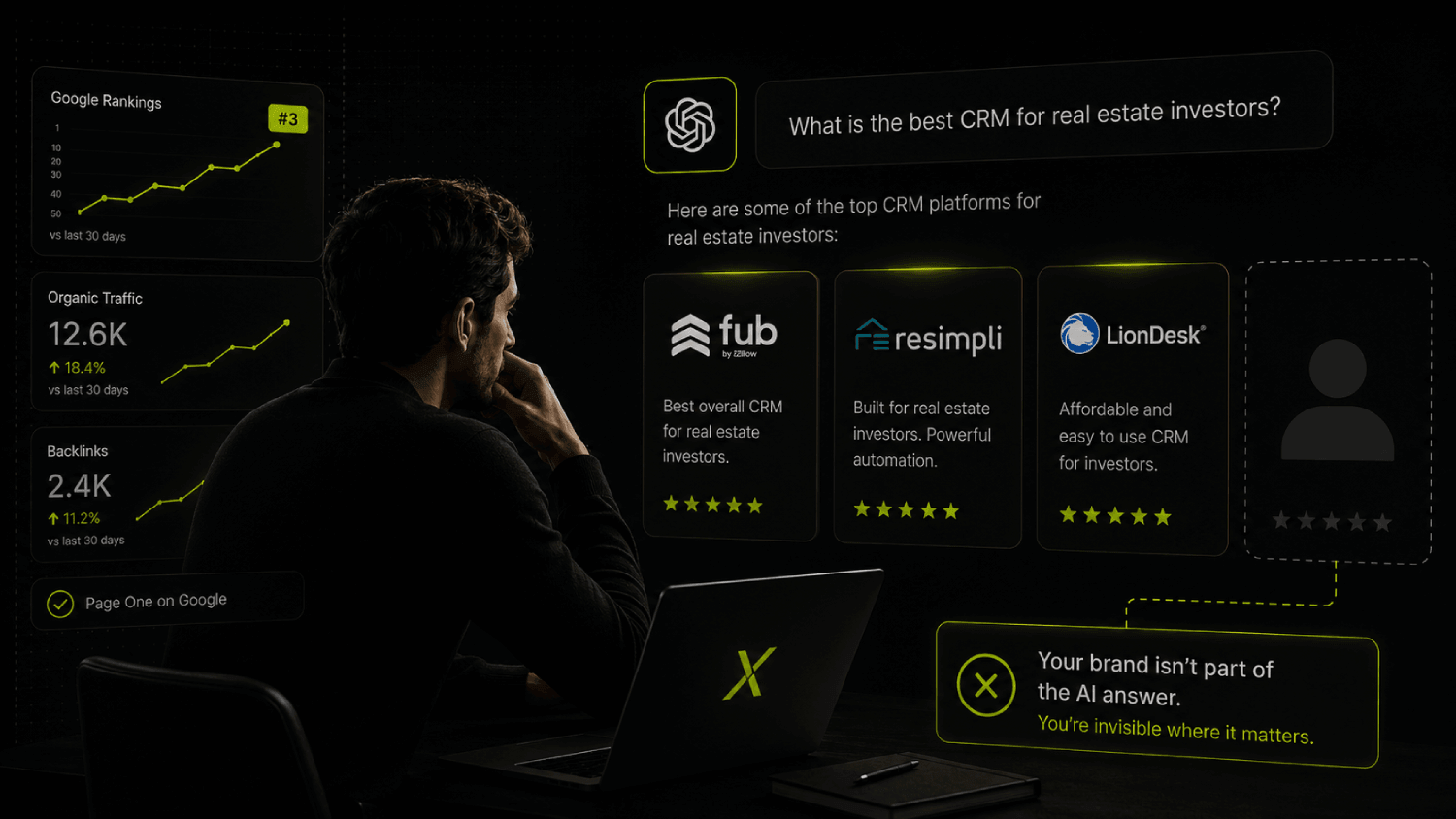
Your page is ranking on page one of Google.
Your content is solid, your backlinks are real, and your traffic numbers look fine.
But when your potential customers ask ChatGPT or Perplexity to recommend tools in your category, your brand does not appear. Your competitors do.
This is not primarily a content problem. It is often a Machine Readability problem. When an LLM retrieves your page, it processes raw text and has to infer what everything means: who wrote this, when it was published, what company this is about, and what category this page belongs to. That inference process introduces ambiguity.
Schema markup is what eliminates that ambiguity. It is a layer of structured, machine-readable data embedded directly in your page code that tells AI systems exactly what your content represents, without making them guess.
Most B2B SaaS companies treat schema as a one-time task that someone on the technical team handled years ago to get those star ratings showing in Google results. That is a problem because the use case for schema has completely shifted.
Two of the biggest AI search platforms went on record in March 2025 to confirm they use structured data to interpret web content for AI-generated responses, not just traditional search.
The gap between companies that have implemented schema correctly for AI citation and those that have not is widening Every Single Month.
This guide covers the five schema types with the most direct impact on LLM citation: what each one does at the level of how AI models extract and attribute information, the exact JSON-LD to implement them, and where to prioritize your time. If you have been treating schema as a display feature, this guide will change that.
Why Schema Markup Matters for LLM Citation (Not Just Rich Snippets)

Schema markup improves LLM citation rates because it replaces machine inference with machine-readable facts. When an AI retrieves your page, it does not “read” the way a human does.
It processes tokens, resolves entity relationships, and makes probabilistic judgments about what your content represents. Schema is the layer that tells it directly, removing the guesswork that causes pages to get skipped or misattributed.
Most SEO teams implemented schema once, years ago, for one reason: rich snippets. Star ratings in Google results. FAQ accordions. Recipe cards. Those are display features, not the whole story. The real shift is that the same structured data that earned you a rich result in 2019 is now telling AI models who you are, what you do, and whether your content is worth attributing.
What Microsoft and Google Actually Confirmed in 2025
Two on-the-record confirmations came within days of each other in March 2025, and most teams still have not processed what they actually mean.
At SMX Munich, Fabrice Canel, Principal Product Manager at Microsoft Bing, stated that schema markup helps Microsoft’s LLMs understand web content. This was not a blog post. It was a public, on-stage confirmation from the person who oversees Bing’s crawling infrastructure.
Days later, at Google’s Search Central Live event in New York, structured data engineer Ryan Levering said that a lot of Google’s systems run much better with structured data, describing it as a key factor in grounding and scaling their generative AI systems.
These two statements together represent the first time major AI search platforms went on the record about schema’s role in LLM-driven results. The important nuance, one that almost every other analysis glosses over, is that these confirmations apply specifically to Bing Copilot and Google AI Overviews.
For ChatGPT (which does not rely on Bing’s index by default) and Perplexity, there is no equivalent public confirmation yet. But the correlation data, which we’ll get to next, tells a consistent story across all four platforms.
The Citation Data That Should Get Your Attention
Pages using seven or more schema types appear in AI citations at a disproportionately high rate compared to their overall share of the web.
One important clarification here: the same research found weak correlation between any specific schema type and the raw number of times a page gets cited. What schema appears to influence is WHETHER a page gets into the citation pool at all. Think of it less as a ranking signal and more as a prerequisite for extraction.
A February 2024 study published in Nature Communications found that LLMs extract information significantly more accurately from structured inputs with defined fields than from unstructured “extract what matters” prompts.
The analogy holds for web content: schema is the equivalent of giving a model a pre-filled form rather than a blank page to interpret. Less inference means fewer errors, and fewer errors means more reliable attribution.
How LLMs Use Schema Differently Than Google’s Crawler
Google’s crawler uses schema to trigger rich results. LLMs use schema to resolve identity and verify claims. That distinction matters enormously for how you should think about implementation.
When Google’s crawler encounters Organization schema, it checks whether the markup qualifies the page for a Knowledge Panel or business listing. When an LLM retrieves your page, it reads the JSON-LD directly as structured context alongside the page text. The sameAs array in your Organization schema gives the model a list of corroborating references to cross-check against its training data.
The datePublished in your Article schema tells it whether this content is likely current or potentially outdated. The step array in your HowTo schema gives it a pre-structured process it can extract without parsing prose.
As iPullRank’s Michael King put it, because AI routing decisions are modality-aware, having your information available in text, tables, and structured data gives you more entry points into the retrieval process. If a system routes a sub-query to a structured data source and you only have prose, you are invisible to that branch of the retrieval process entirely.
The 5 Schema Types With the Highest Impact on LLM Visibility
The five schema types that drive the most AI citation value for B2B SaaS sites are Organization, Article, FAQ, HowTo, and BreadcrumbList. Each one does a different job, and implementing all five on the right pages is a different exercise than blindly deploying markup across the site.
Here is where each type belongs before diving into the implementation detail for each:
| Schema Type | Where to Implement |
|---|---|
| Organization | Homepage and /about page |
| Article | Every blog post, guide, and case study |
| FAQPage | Informational posts and guides with a visible FAQ section |
| HowTo | Process guides, implementation walkthroughs, how-to posts |
| BreadcrumbList | Every page on the site, sitewide |
Organization Schema: Your Entity Identity Signal
Organization schema is the single most important schema type for LLM SEO because it tells every AI model who you are before it reads a single word of your content. Without it, an LLM retrieving your page has to infer your brand identity from surrounding context, which is exactly how AI hallucinations about your brand get introduced.
The property most implementations get wrong is sameAs. This is not a nice-to-have. For AI citation purposes, the sameAs array is where you list every authoritative, external reference point that confirms your entity exists: your LinkedIn company page, your Crunchbase profile, your G2 listing, your Capterra page, your official Twitter/X profile.
These cross-references are what LLMs use to verify that the entity described in your schema matches the entity they already have data about. Missing sameAs entries mean the model falls back on inference, which is where inaccuracy starts.
The description property deserves equal attention. Write it as a one-sentence entity definition, not a marketing tagline. “Acme is a project management platform for distributed engineering teams” is citation-friendly. “Acme is the world’s most powerful work management solution” is not. AI models favor definitional language they can extract and use verbatim.
Here is a production-ready Organization schema template. Place this in the <head> of your homepage and /about page:
{
  "@context": "https://schema.org",
  "@type": "Organization",
  "name": "Your Company Name",
  "url": "https://yourcompany.com",
  "logo": {
    "@type": "ImageObject",
    "url": "https://yourcompany.com/logo.png"
  },
  "description": "Your Company is a [product category] for [target audience] that [primary value proposition].",
  "foundingDate": "2020",
  "sameAs": [
    "https://www.linkedin.com/company/yourcompany",
    "https://twitter.com/yourcompany",
    "https://www.crunchbase.com/organization/yourcompany",
    "https://www.g2.com/products/yourcompany/reviews",
    "https://www.capterra.com/p/yourcompany"
  ],
  "knowsAbout": [
    "Topic 1",
    "Topic 2",
    "Topic 3"
  ],
  "contactPoint": {
    "@type": "ContactPoint",
    "contactType": "customer support",
    "url": "https://yourcompany.com/contact"
  }
}
Article Schema: Your Content Authority and Freshness Signal
Article schema tells an LLM three things it cannot reliably infer from prose alone: who created this content, when it was created, and who is responsible for publishing it.
LLMs weight recency heavily. A page without datePublished and dateModified is, from the model’s perspective, potentially years old. It may still get cited, but it goes into the pool with a recency handicap.
The author property is where most CMS plugins underdeliver. They populate the author’s name and stop. For LLM SEO, the author needs to be a linked Person entity with a url pointing to the author’s bio page on your site. That url allows the model to resolve the author as a named entity with verifiable credentials, rather than just a string of text. Expertise verification is part of how AI models assess source credibility.
dateModified is equally critical and almost always left empty. If you have updated a post significantly and have not updated the dateModified field, the model treats the page as if it has never been touched since the original publish date. For fast-moving topics like LLM SEO, that is a meaningful credibility gap.
{
  "@context": "https://schema.org",
  "@type": "Article",
  "headline": "Your Article Title",
  "description": "A concise, factual description of what this article covers.",
  "datePublished": "2026-01-15",
  "dateModified": "2026-04-01",
  "author": {
    "@type": "Person",
    "name": "Author Full Name",
    "url": "https://yourcompany.com/team/author-name",
    "jobTitle": "Head of Marketing"
  },
  "publisher": {
    "@type": "Organization",
    "name": "Your Company Name",
    "logo": {
      "@type": "ImageObject",
      "url": "https://yourcompany.com/logo.png"
    }
  },
  "mainEntityOfPage": {
    "@type": "WebPage",
    "@id": "https://yourcompany.com/blog/your-article-slug"
  },
  "image": "https://yourcompany.com/blog/your-article-image.jpg"
}
Most WordPress SEO plugins auto-generate Article schema but leave author.url and dateModified blank. Go check yours right now.
FAQ Schema: Your Direct Answer Format Signal
FAQ schema is the highest-density GEO format available because it pre-extracts your content into the exact structure AI models use to retrieve and present information: a question followed by a direct answer. When you implement FAQPage schema correctly, you are not just marking up content. You are handing the model pre-packaged Q&A pairs it can cite without parsing prose.
The question-writing discipline here is non-negotiable. Write questions the way someone would type them into ChatGPT, not the way someone types a query into Google.
- “How does schema markup help with LLM SEO?” is a ChatGPT question.
- “schema markup LLM SEO” is a Google query.
These are different, and FAQ schema optimized for conversational retrieval will perform better in AI search than FAQ schema written for traditional search intent.
A firm rule: every question in your FAQPage schema must also appear as visible content on the page. Google’s structured data guidelines prohibit markup that does not match visible page content, and AI models will cross-reference the schema against the rendered text. Mismatches lead to distrust, not citation.
{
  "@context": "https://schema.org",
  "@type": "FAQPage",
  "mainEntity": [
    {
      "@type": "Question",
      "name": "Does schema markup help with LLM SEO?",
      "acceptedAnswer": {
        "@type": "Answer",
        "text": "Yes. Microsoft's Fabrice Canel confirmed at SMX Munich in March 2025 that schema markup helps Microsoft's LLMs understand web content for Copilot. Google's Ryan Levering confirmed the same days later for AI Overviews. Beyond confirmed platforms, data shows roughly 71% of pages cited by ChatGPT include structured data, suggesting schema's role extends further than official statements currently cover."
      }
    },
    {
      "@type": "Question",
      "name": "What is the most important schema type for AI search visibility?",
      "acceptedAnswer": {
        "@type": "Answer",
        "text": "Organization schema is the most important starting point because it establishes your entity identity across the web. Without it, LLMs cannot reliably verify who you are or associate your content with your brand. Pair it with Article schema for content authority signals and FAQPage schema for direct answer extraction."
      }
    }
  ]
}
HowTo Schema: Your Process Query Signal
HowTo schema matters for LLM SEO because it explicitly maps a step-by-step process, and AI models retrieving process-type queries actively look for structured steps they can extract and present in sequence. When someone asks Perplexity how to do something, the model prioritizes content that presents steps in a defined, numbered format over prose that describes the same steps in paragraphs.
Think about what happens without it. A B2B SaaS company publishes a thorough guide on setting up a customer onboarding workflow. The steps are there, the logic is sound, but from the model’s perspective it is just a wall of prose. It has to guess where one step ends and the next begins, which means it either skips the content entirely or extracts it imprecisely.
HowTo schema solves this by turning each step into an individually labelled, extractable unit. The model knows exactly where Step 3 starts, what it is called, and what it instructs, because the schema said so explicitly.
The tool property is worth including when your process involves specific software, since listing your own product as a tool reinforces entity association between your brand and the process being described.
{
  "@context": "https://schema.org",
  "@type": "HowTo",
  "name": "How to Set Up a Customer Onboarding Workflow",
  "description": "A step-by-step process for building a repeatable onboarding workflow in a B2B SaaS product.",
  "totalTime": "PT45M",
  "tool": [
    {
      "@type": "HowToTool",
      "name": "Your Product Name"
    }
  ],
  "step": [
    {
      "@type": "HowToStep",
      "name": "Define your onboarding milestones",
      "text": "Identify the 3 to 5 actions that indicate a new customer has reached their first value moment in your product."
    },
    {
      "@type": "HowToStep",
      "name": "Map triggers to each milestone",
      "text": "Assign an automated trigger or manual task to each milestone so your team knows when to intervene."
    },
    {
      "@type": "HowToStep",
      "name": "Build the communication sequence",
      "text": "Write and schedule the email or in-app messages that guide customers from signup to their first value moment."
    },
    {
      "@type": "HowToStep",
      "name": "Set success metrics and review cadence",
      "text": "Define what 'completed onboarding' looks like quantitatively and schedule a monthly review to improve the workflow."
    }
  ]
}
BreadcrumbList Schema: Your Content Hierarchy Signal
BreadcrumbList schema tells an LLM where a page sits in the larger architecture of your site, which matters for AI citation because it signals whether this page is part of a deliberate topic cluster or an isolated, potentially low-authority standalone post. Content hierarchy is a trust signal.
A page at yourcompany.com > blog > llm-seo > schema-markup-guide tells a model this content lives inside a structured cluster on LLM SEO. That cluster signal reinforces topical authority. A page that appears to exist in isolation, with no breadcrumb context, gives the model nothing to work with beyond the content itself.
BreadcrumbList is also the lowest-effort schema type to implement correctly. Lowest-effort does not mean widely implemented. Meridian15’s audit of 152 Calgary business websites found 72% shipping some JSON-LD but only 31% carrying BreadcrumbList, which makes the easiest schema type on this list also one of the most commonly skipped. Most WordPress SEO plugins, including RankMath and Yoast, auto-generate BreadcrumbList markup once configured. The priority is confirming that the auto-generated breadcrumbs reflect your actual site structure, not a default plugin path.
{
  "@context": "https://schema.org",
  "@type": "BreadcrumbList",
  "itemListElement": [
    {
      "@type": "ListItem",
      "position": 1,
      "name": "Home",
      "item": "https://yourcompany.com"
    },
    {
      "@type": "ListItem",
      "position": 2,
      "name": "Blog",
      "item": "https://yourcompany.com/blog"
    },
    {
      "@type": "ListItem",
      "position": 3,
      "name": "LLM SEO",
      "item": "https://yourcompany.com/blog/llm-seo"
    },
    {
      "@type": "ListItem",
      "position": 4,
      "name": "Schema Markup for LLM SEO",
      "item": "https://yourcompany.com/blog/llm-seo/schema-markup-guide"
    }
  ]
}
Can You Put Multiple Schema Types on the Same Page?
Yes, and for most pages you should. A blog post can and should carry Article schema, FAQPage schema, and BreadcrumbList schema simultaneously.
Your homepage should carry Organization schema and potentially BreadcrumbList. There is no penalty for combining schema types on a single page, provided each block accurately reflects visible content on that page.
The cleanest way to do this is with separate JSON-LD script blocks, one per schema type, each placed in the <head> of the page. Most SEO plugins handle this automatically when you assign multiple schema types to a single page.
For teams that want to consolidate everything into a single block, the @graph syntax is the right approach. It lets you define multiple schema entities in one JSON-LD object and link them together with @id references, which is particularly useful for establishing explicit relationships between your Organization, your authors, and your content:
{
  "@context": "https://schema.org",
  "@graph": [
    {
      "@type": "Organization",
      "@id": "https://yourcompany.com/#organization",
      "name": "Your Company Name",
      "url": "https://yourcompany.com",
      "logo": {
        "@type": "ImageObject",
        "url": "https://yourcompany.com/logo.png"
      }
    },
    {
      "@type": "Article",
      "@id": "https://yourcompany.com/blog/your-post/#article",
      "headline": "Your Article Title",
      "datePublished": "2026-01-15",
      "dateModified": "2026-04-09",
      "author": {
        "@type": "Person",
        "name": "Author Name",
        "url": "https://yourcompany.com/team/author-name"
      },
      "publisher": {
        "@id": "https://yourcompany.com/#organization"
      },
      "mainEntityOfPage": {
        "@type": "WebPage",
        "@id": "https://yourcompany.com/blog/your-post"
      }
    },
    {
      "@type": "BreadcrumbList",
      "itemListElement": [
        {
          "@type": "ListItem",
          "position": 1,
          "name": "Home",
          "item": "https://yourcompany.com"
        },
        {
          "@type": "ListItem",
          "position": 2,
          "name": "Blog",
          "item": "https://yourcompany.com/blog"
        },
        {
          "@type": "ListItem",
          "position": 3,
          "name": "Your Post Title",
          "item": "https://yourcompany.com/blog/your-post"
        }
      ]
    }
  ]
}
Notice that the Article’s publisher field references "@id":
"<https://yourcompany.com/#organization>" instead of repeating the Organization block. That cross-reference is what makes @graph powerful: it tells the model that the article and the organization are explicitly connected entities, not just two pieces of markup that happen to live on the same page.
How to Prioritize Schema Implementation Across Your B2B SaaS Site
Prioritization matters because implementing schema across an entire site at once is impractical for most teams, and the pages most likely to generate AI citations are not necessarily the ones with the most content.
Start With Your Best-Ranking Pages, Not Your Newest
Research on AI Overview source distribution shows that the overwhelming majority of cited pages come from the top organic positions. A page ranking on page one of Google for a relevant query already has the domain authority signals that make it a candidate for AI citation.
Adding schema to that page increases the probability it actually gets selected. Starting with new or low-ranking pages instead is a common mistake. Schema improves extractability; it does not create authority from scratch.
The Implementation Sequence That Makes Sense
For most B2B SaaS sites, this order minimizes wasted effort and maximizes early impact:
- Organization schema on your homepage and /about page. This is a one-time setup that pays dividends across every other page on your site, because entity identity is the foundation everything else builds on.
- BreadcrumbList sitewide. Configure your SEO plugin to auto-generate this correctly. It takes about 30 minutes and covers the entire site.
- Article schema on all published blog posts. Batch update via plugin or a developer script. The critical fields to confirm are
author.url,datePublished, anddateModified. - FAQ schema on every informational post with a visible FAQ section. Go through your top-performing posts first. Add the FAQ section to the page content if one does not already exist, then mark it up.
- HowTo schema on any process or implementation guide. These are typically the posts targeting “how to” queries, where structured step extraction provides the clearest advantage.
Validate Before You Deploy
Two free tools cover everything you need:
- Google’s Rich Results Test confirms that Google can parse the schema and that the markup qualifies for rich results where applicable.
- Schema.org Validator confirms the markup is technically valid independent of Google’s interpretation.
Run both before deploying any schema. The most common mistake that breaks schema for AI systems is marking up content that does not appear visibly on the page. This violates Google’s structured data guidelines and causes AI models to distrust the markup entirely. The schema must match the page.
What Schema Cannot Do (And What Actually Drives LLM Citation)
Schema is not the whole answer. Understanding exactly what it cannot do is what separates teams that implement schema and see results from teams that implement schema and wonder why nothing changed.
Schema resolves ambiguity and reduces extraction friction. It does not compensate for absent authority. A page with clean, complete JSON-LD but no external mentions, weak topical coverage, and no inbound links is still a low-authority page. AI models retrieve from a pool of trusted sources, and schema does not expand that pool. It helps pages already in the pool get cited more reliably.
The other factors that drive LLM citation, and that schema cannot substitute for, are:
- Claim density. AI models extract specific, attributable statements. Pages full of generalities (“many companies struggle with onboarding”) get summarized away. Pages full of specific claims (“73% of SaaS customers who do not reach their first value moment within 14 days churn within 90 days”) get cited.
- Entity presence on third-party sites. If your brand appears in G2 reviews, Reddit threads, industry publications, and comparison sites, LLMs have corroborating data to work with. If your brand only appears on your own domain, even perfect schema cannot override the absence of external validation.
- Content structure. Definition-forward H2 sections, short direct answers before long explanations, and FAQ sections at the end of every informational post are the prose-level equivalents of schema. Both need to be present for a page to perform at full citation potential.
For a deeper look at how these elements combine, the LLM SEO guide on this site covers the full technical and content framework. For the entity layer specifically, the entity optimization page walks through how to build brand presence across the sources AI models draw from most heavily.
Schema Markup and AI Hallucinations: The Connection Most Teams Are Not Making
If your brand has ever been described inaccurately in a ChatGPT or Perplexity response, the most likely cause is not that the AI “made something up.” The cause is that the model had insufficient structured data to work with, fell back on inference from surrounding context, and the inference was wrong.
Organization schema with a precise description and a complete sameAs array gives the model authoritative data to work from instead of requiring it to infer. The model is not creative when it hallucinates. It is filling in gaps. Schema closes those gaps before they become errors.
This matters especially for B2B SaaS companies in crowded categories. If you operate in a space where 20 similar products exist and your brand presence is thin, an LLM retrieving a query about your category has very little to distinguish you from your competitors at the entity level.
It may merge attributes from multiple brands. It may misattribute a feature to you that belongs to a competitor, or vice versa. Organization schema with rich entity properties, combined with external mentions across authoritative sources, is the structural defense against that outcome.
If your brand is currently being described inaccurately in AI search responses, this is a solvable problem. The AI hallucination fix page covers the diagnostic and remediation process in detail. And if your competitor is already showing up in ChatGPT while you are not, schema is one of the first structural gaps to audit.
FAQ
1. Does schema markup actually help ChatGPT and Perplexity, or just Google and Bing?
The confirmed platforms are Microsoft Bing Copilot and Google AI Overviews, where Fabrice Canel (Microsoft) and Ryan Levering (Google) went on record in March 2025. ChatGPT and Perplexity have not issued equivalent statements.
That said, data from SEranking’s citation dataset shows roughly 71% of pages cited by ChatGPT include structured data, which is hard to dismiss. The most defensible position: implement schema for confirmed platforms, and treat the correlation data as strong enough evidence to extend that implementation across your full site.
2. What schema types are best for AI search visibility in B2B SaaS?
The five that matter most are Organization (entity identity), Article (content authority and recency), FAQPage (direct answer extraction), HowTo (process query matching), and BreadcrumbList (content hierarchy).
For most B2B SaaS sites, implementing these five correctly will cover the vast majority of AI citation use cases. Start with Organization and Article as the foundation, then layer in FAQPage and HowTo on the pages where they apply.
3. Can schema markup help fix AI hallucinations about my brand?
Yes, and this is one of its most underappreciated applications. Organization schema with a precise, definitional description and a complete sameAs array reduces the model’s reliance on inference by giving it authoritative structured data to work from.
Hallucinations most commonly occur when an AI has insufficient entity data and fills gaps with inference. Schema, combined with external brand presence on authoritative third-party sites, closes those gaps.
4. How do I add schema markup if I am not a developer?
RankMath and Yoast SEO, both WordPress plugins, handle the most common schema types without writing code. RankMath in particular provides granular control: you can assign Organization schema to your homepage, Article schema to every blog post automatically, and FAQPage schema to individual posts with visible Q&A sections.
For non-WordPress sites, Schema App is an enterprise-grade option. For any implementation, validate with Google’s Rich Results Test and the Schema.org Validator before going live.
5. Will adding schema markup guarantee my site gets cited by AI?
No. Schema improves extractability for pages already in the citation pool. It does not create authority where none exists. Pages with thin content, no external brand mentions, and no inbound links will not see meaningful citation gains from schema alone.
The correct framing is that schema removes friction for pages that already have the authority and content quality to be worth citing.
6. How often should I update my schema markup?
Treat schema as live infrastructure, not a one-time implementation. Update dateModified in Article schema every time you significantly revise a post. Audit Organization schema quarterly to confirm your sameAs references are still active and accurate.
Add HowTo and FAQPage schema to newly published posts as part of your standard publishing checklist. The biggest schema mistake most teams make is implementing it once and forgetting it exists.
7. What is the fastest schema win for a B2B SaaS site with no existing structured data?
Organization schema on your homepage. It takes under 30 minutes to implement correctly, it covers your entire site’s entity identity in one JSON-LD block, and it is the first thing an LLM checks when resolving a brand query.
Add sameAs references to every authoritative listing you appear on, write a clean definitional description, and validate with both Google’s Rich Results Test and the Schema.org Validator. That single implementation does more for your AI citation potential than any other schema type.
Conclusion
Schema markup’s role in LLM SEO is not to game an algorithm. It is to do what every piece of machine-readable infrastructure does: replace probabilistic guessing with deterministic facts.
When an AI model retrieves your page with complete Organization, Article, FAQ, HowTo, and BreadcrumbList markup, it is not working harder to understand you. It already knows who you are, what this content covers, how recent it is, and where it fits in your site architecture. That clarity is what citation is built on.
The starting point is Organization schema on your homepage, implemented today. Every sameAs reference you add is another data point an AI model can cross-reference to confirm your entity.
Every Article schema with a real dateModified and a linked author entity is another piece of content that enters the citation pool with full context rather than ambiguity. These are not large investments. They are structural decisions that compound over time as AI search handles more of the queries your buyers are asking.
If you want to know where your site currently stands on AI citation readiness, DerivateX’s Free AI Visibility Audit includes a structured data review as part of the diagnosis.
Written byAyush SharmaVP, SEO & AI Search, DerivateX
VP, SEO & AI Search at DerivateX. We're a B2B SaaS SEO and Generative Engine Optimization agency that engineers AI citations in ChatGPT, Perplexity, Claude, and Gemini and connects them to demo bookings and revenue pipeline.
Reviewed byApoorv SharmaCo-founder, DerivateX
Apoorv Sharma is the co-founder of DerivateX, a B2B SaaS SEO and Generative Engine Optimization agency that engineers AI citations in ChatGPT, Perplexity, Claude, and Gemini and connects them to demo bookings and revenue pipeline. He is the author of the 2026 AI Visibility Benchmark Report and the Citation Engineering methodology. He's also the brain behind "Found On AI" and has sold 2 of his companies previously
Cited by AI